

Is Free Shipping on Furniture Worth It? A 2026 Guide
Table of Contents
- What Free Shipping on Furniture Really Means (and What It Hides)
- Furniture Delivery Fees Explained: From Parcel to Freight
- White Glove Delivery vs Curbside: What Each Option Costs You
- Is White Glove Delivery Worth the Extra Cost? A Cost-Benefit Analysis
- Hidden Costs and Drawbacks of Free Shipping on Furniture
- How to Calculate the True Value of a Furniture Shipping Offer
- The Verdict: Getting the Best Deal on Furniture Delivery
- Frequently Asked Questions
Last Updated: September 8, 2026
What Free Shipping on Furniture Really Means (and What It Hides)
"Free shipping on furniture" sounds like an unambiguous win, but it is rarely the straightforward discount it appears. It is a pricing and logistics strategy where the retailer absorbs delivery costs into the product price or margins, often in exchange for a minimum purchase or a slower delivery window.
At PracticalHomeEssentials.com, we understand that "free shipping" can raise questions. The catch varies by retailer, and understanding it comes down to reading the fine print on thresholds, timelines, and service levels.
Before you celebrate a free shipping offer, check three things: the minimum purchase requirement, the estimated delivery window, and whether the service is curbside or white glove. These three variables determine whether you're getting genuine value or simply prepaying for delivery in a less obvious way.
Furniture Delivery Fees Explained: From Parcel to Freight
Furniture shipping costs depend primarily on how the item travels. Small accessories ship as parcel, which is cheap and fast. Large pieces like sofas, dressers, and patio sets move as freight, involving pallets, dedicated carriers, and significantly higher logistics costs.
The shipping method dictates the fee structure. Parcel deliveries typically use flat-rate shipping or a simple threshold for free shipping. Freight shipments often carry surcharges based on weight, delivery radius, and whether the carrier must navigate stairs or narrow hallways. Retailers commonly offer free freight shipping only above a certain order value, sometimes called a shipping threshold.
Understanding the distinction between parcel and freight explains why a $40 lamp ships free but a $400 sofa does not. The sofa requires a freight carrier, a delivery window, and often a two-person crew. Those costs are real, and someone pays for them.
How Freight Carriers Structure Their Fees
Freight carriers like FedEx Freight, UPS Freight, and regional LTL (less-than-truckload) carriers price shipments based on weight, dimensional weight, and accessorials. Dimensional weight accounts for how much space a package occupies on a truck, a bulky but lightweight headboard can cost more to ship than a denser, heavier box. Accessorials are add-on charges for services like a liftgate, a residential delivery surcharge, or an inside delivery appointment.
A typical LTL shipment for a single sofa might carry a base rate of $150 to $400 depending on distance, but the final invoice often includes:
- Residential delivery surcharge: $25-$100, applied because the carrier must send a truck to a home rather than a commercial dock.
- Liftgate fee: $50-$150, required when the delivery truck lacks a built-in lift and the item must be lowered to the ground.
- Inside delivery fee: $50-$200, covering movement past the first doorway into a room.
- Appointment fee: $25-$75, charged when the buyer requires a specific delivery window.
Retailers absorb some or all of these costs when they advertise "free shipping." The question is which ones they absorb and which they pass along in the product price or as a separate line item at checkout.
Why Retailers Use Shipping Thresholds
Shipping thresholds are a pricing strategy designed to increase average order value. A retailer might set a $999 threshold for free freight shipping because the average furniture order is around $800, nudging buyers to add a lamp, rug, or accessory to cross the line. When that happens, the retailer's margin on the additional item more than covers the freight cost it absorbs.
Thresholds also segment customers. Buyers who order below the threshold pay a shipping fee that often approximates the retailer's actual cost. Buyers who cross the threshold get a discount that is effectively a volume incentive. Neither group is being misled, but the "free" label obscures the fact that the threshold itself is a pricing lever.
The Parcel-to-Freight Boundary
Most furniture retailers draw the parcel-freight line at around 50 to 70 pounds or at a package dimension of 108 inches in length. Items below that line, like dining chairs, ottomans, and small carts, ship via FedEx Ground or UPS Ground at rates of $15 to $60. Items above it move as freight. This boundary explains why a set of four dining chairs might ship free while a single loveseat does not. The chairs fit on a parcel carrier's conveyor system; the loveseat requires a pallet and a freight truck.
Comparing Carrier Timelines
Parcel shipments typically arrive in 3 to 7 business days. Freight shipments are slower, often taking 7 to 14 business days, because LTL carriers consolidate multiple shipments on one truck and route through regional hubs. If a retailer offers free freight shipping, the delivery window is usually at the longer end of that range. Paid expedited freight options can shorten the window to 3 to 5 business days but typically add $100 to $300 to the cost.
The trade-off between speed and cost is central to evaluating whether free shipping is worth it. A free shipping offer with a 12-day window might be a poor deal for someone furnishing a rental before a lease start date, even if the dollar savings look attractive.
White Glove Delivery vs Curbside: What Each Option Costs You
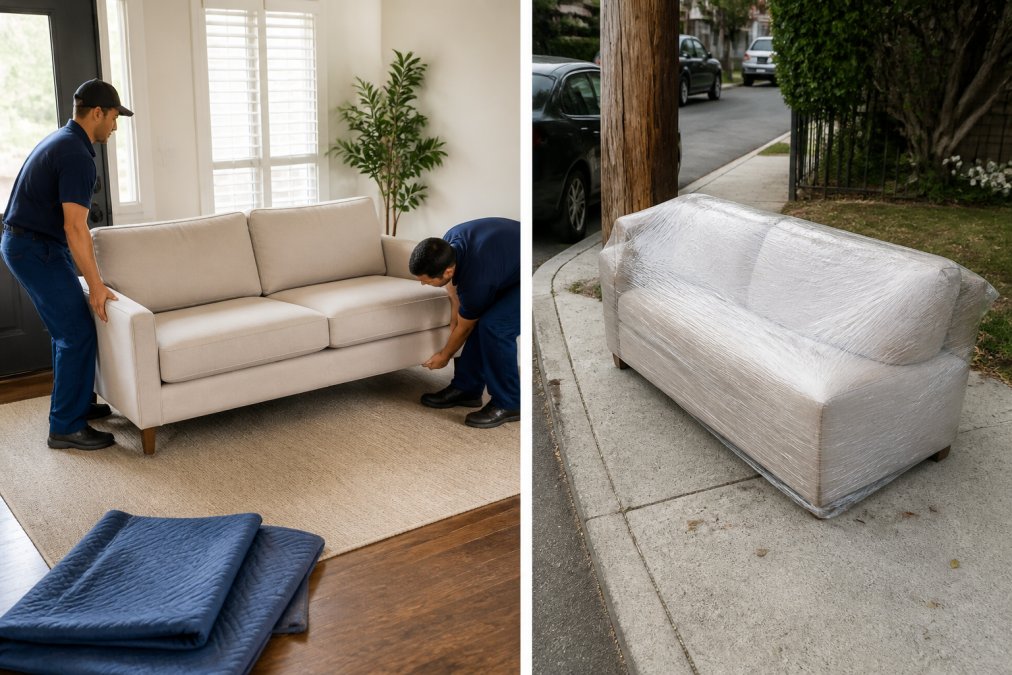
Curbside delivery means the carrier brings the item to your doorstep or building entrance, but you handle moving it inside and assembling it. White glove service includes delivery into your chosen room, unpacking, placement, and often assembly and debris removal.
The cost difference between white glove delivery vs curbside is substantial. Curbside is typically included in free shipping offers or costs a modest fee. White glove service adds a surcharge because it requires more labor, more time, and higher carrier liability.
Most free shipping promotions on furniture default to curbside delivery. That's the first hidden cost to anticipate: the offer may be free, but only to your curb. If you live on a third-floor walkup or lack a second person to help carry a heavy piece, the "free" option can quickly become impractical.
| Service Level | What's Included | Typical Cost Impact | Best For |
|---|---|---|---|
| Curbside | Drop-off at building entrance | Included in free shipping offers | Ground-floor homes with help available |
| Threshold | Inside first doorway only | Small surcharge | Single-story homes |
| White Glove | Room of choice, unpacking, assembly, debris removal | Significant surcharge | Heavy items, stairs, solo buyers |
Is White Glove Delivery Worth the Extra Cost? A Cost-Benefit Analysis
Is white glove delivery worth the extra cost? For large, heavy, or fragile items, frequently yes. For lightweight pieces you can carry yourself, rarely.
Run a simple cost-benefit analysis before paying for white glove service. First, estimate the weight and dimensions of your purchase, a patio rocking chair set presents a very different carrying challenge than a side table. Second, assess your building: elevator access, stair width, and distance from the delivery vehicle all matter. Third, consider whether you have help available and whether you own basic assembly tools.

When white glove service includes assembly, the value calculation changes. Professional assembly for complex furniture typically costs more than the delivery surcharge itself, making the bundled service a reasonable deal. The key question is whether the retailer's white glove fee is competitive with what a local handyman would charge for the same work.
Many buyers find white glove service worth it for bedroom and living room furniture, where pieces are heavy and missteps during assembly can void warranties. For accent pieces and decor, curbside delivery usually suffices.
Hidden Costs and Drawbacks of Free Shipping on Furniture
The most significant hidden cost of free shipping on furniture is the delivery window. Free freight shipments often use consolidated routes, meaning your item arrives days or even weeks later than a paid expedited option. If you're furnishing a home office before a deadline, that delay carries real cost.
Return shipping logistics represent a second hidden cost. Many retailers offer free delivery but require the buyer to cover return shipping or pay restocking fees. For large furniture, return freight can cost more than the original delivery fee. Check the return policy before ordering, not after.
Insurance and damage liability form a third consideration. Transit damage happens, and the question is who bears the risk. Some free shipping offers shift more responsibility to the buyer, while paid white glove services often include better carrier liability coverage. The Federal Trade Commission guidance on online shopping advises consumers to understand delivery and return terms before completing a purchase.
Environmental impact is the angle most guides miss. Freight shipping produces significantly higher emissions per item than parcel delivery, and free shipping incentives can encourage more frequent, less consolidated orders. Research on last-mile delivery emissions shows that delivery consolidation meaningfully reduces environmental impact.
The Return Shipping Trap: What It Actually Costs
Returning a large furniture item is not like returning a shirt. Most retailers require you to repackage the item in its original box, schedule a pickup with the same freight carrier, and pay for the return shipment. Freight return rates are often 20% to 40% higher than the original outbound rate because the carrier handles a one-off pickup rather than a scheduled route stop. A sofa that shipped for $150 might cost $200 to $250 to return.
Restocking fees compound the problem. Many furniture retailers charge 10% to 25% of the product price when a return is not due to a defect or shipping error. On a $1,200 dresser, a 20% restocking fee is $240, on top of the return freight. A "free shipping" offer that saves you $150 on the way in can expose you to $400 or more in return costs if the piece does not work in your space.
Who Pays When Furniture Arrives Damaged?
The damage liability question is rarely answered on product pages. When a shipment arrives damaged, three parties are involved: the retailer, the freight carrier, and the buyer. The retailer's policy determines who files the claim and who bears the financial risk.
With free curbside shipping, the buyer often discovers damage only after the carrier leaves and the item is unpacked. At that point, the buyer must document the damage with photos, file a claim with the retailer, and wait for an inspection. Some retailers require the damaged item to remain in its original packaging until the claim is resolved, which can delay a replacement by weeks.
Paid white glove services typically include a different process. The delivery crew unpacks the item, inspects it in your room, and notes any damage on the delivery receipt before leaving. This documentation shifts liability to the carrier immediately, and the retailer can process a replacement without requiring you to repackage the damaged item. The extra cost of white glove service is, in part, an insurance premium against the hassle of damage claims.
The Environmental Cost of Free Shipping
Free shipping incentives create a subtle environmental problem. When delivery is free, buyers have less reason to consolidate orders, so they are more likely to place two separate orders if each ships free. Each order triggers a separate freight trip, and freight trucks emit significantly more carbon per mile than parcel vans.
Consolidated delivery is the most effective way to reduce the footprint of a furniture purchase. Ordering multiple pieces at once, choosing a slower delivery window that allows the carrier to optimize its route, and avoiding expedited shipping all reduce emissions. Some retailers offer a "green delivery" option that consolidates shipments and extends the delivery window by a few days in exchange for a small discount or a carbon offset donation.
How to Calculate the True Value of a Furniture Shipping Offer
To calculate whether a free shipping offer is genuinely worthwhile, compare the total delivered cost against alternatives. Start with the product price plus any mandatory fees, then add the value of your time for assembly and any tools you'd need to purchase.
A practical framework looks like this:
- Add the product price and any non-negotiable fees
- Compare the free shipping delivery window against paid expedited options
- Estimate assembly time and decide whether professional assembly is worth it
- Factor in return shipping costs if the item might not work in your space
- Calculate the per-item cost of any minimum purchase requirement
The environmental angle also deserves consideration. Consumer guidance on sustainable shipping choices suggests that buyers who consolidate orders and choose slower shipping when possible reduce the overall footprint of their purchases.
For example, a $200 side table with free curbside delivery and a two-week window might cost you $50 in delayed use and $20 in assembly time. A paid white glove option at $80 delivers the same table assembled this week. The "free" shipping is not free at all once you account for your time and the delay.
The Verdict: Getting the Best Deal on Furniture Delivery
Free shipping on furniture is worth it when you understand what the offer excludes. The best deal combines a reasonable product price with a delivery method that matches your physical situation and timeline.
For lightweight items you can carry and assemble yourself, free curbside delivery is genuinely the right call. For heavy pieces, multi-story buildings, or complex assembly, paying for white glove service often saves money compared to the value of your time and the risk of DIY mistakes.
At PracticalHomeEssentials.com, we offer free shipping on our curated selection of home essentials, from C-Shaped Side Table with Faux Marble Top and Storage Shelf to complete patio and office furnishings. Before you buy furniture online, read the delivery policy as carefully as you read the product description, and choose the shipping option that matches how you actually live.
Frequently Asked Questions
What are the hidden drawbacks of free furniture shipping?
The main drawbacks include longer lead times, curbside-only delivery that leaves you to haul items inside, and limited ability to schedule a precise delivery window. Retailers often absorb shipping costs by inflating product prices or using slower freight carriers. You also sacrifice the inspection and placement benefits of white-glove service, which means transit damage might not be noticed until after the driver leaves.
What is the difference between curbside and white-glove delivery?
Curbside delivery drops your furniture at the curb or building entrance, leaving you responsible for moving it inside, unpacking, and assembly. White-glove service includes delivery to your chosen room, professional setup, and removal of packaging debris. The trade-off is cost: white-glove typically adds $50 to $200 or more to your order, while curbside is often free or deeply discounted.
Is white glove delivery worth the extra cost?
White-glove delivery is worth the cost when you're buying heavy, fragile, or oversized pieces like sectionals, dressers, or patio sets. The service protects you from transit damage, saves you from renting a truck or recruiting friends, and includes professional assembly. For smaller, lighter items you can easily carry, curbside delivery is a reasonable way to save money.
Do furniture retailers inflate product prices to cover free shipping?
Some do. Retailers have two main strategies: offering genuine free shipping as a loss leader to attract orders, or building shipping costs into product pricing. You can spot the difference by comparing prices on comparable items across several stores. If a retailer's prices run consistently higher than competitors on similar products, their free shipping is likely factored into the price you see.
Free shipping is a tool, not a gift. Used wisely, it saves money on the right purchases. Used carelessly, it hides costs in delays, assembly time, and return logistics. Choose options that fit your space and your schedule, and you'll furnish your home without paying more than you should.