

Home Essentials vs Pottery Barn: Quality & Value
Table of Contents
- Home Essentials vs Pottery Barn: Quality Comparison Overview
- Construction and Frame Materials: What Sets Them Apart
- Upholstery, Fabrics, and Durability Standards
- How to Spot High Quality Furniture Before You Buy
- Pottery Barn Alternatives on a Budget
- Is Pottery Barn Worth the Money? A Cost-Benefit Analysis
- Customization, Warranty, and Long-Term Value
- Frequently Asked Questions
Last Updated: August 31, 2026
Home Essentials vs Pottery Barn: Quality Comparison Overview
When furnishing a home, the question isn't just where to shop, but whether you're getting genuine quality or paying for a brand name. At PracticalHomeEssentials.com, we've analyzed what separates furniture that lasts from pieces that fade, sag, and disappoint after a year. The comparison between home essentials and pottery barn quality reveals stark differences in construction, materials, and long-term value that most shoppers miss until it's too late.
Pottery Barn built its reputation on design-forward pieces and curated aesthetics. But reputation doesn't tell you whether a sofa frame will hold up to daily use or if bedding will pill after three washes. Home essentials retailers span a wide range, from budget-focused chains to quality-conscious brands competing directly on durability and value. Understanding where each excels requires looking past marketing into the actual materials, construction methods, and warranty coverage that determine longevity.
This guide breaks down the technical differences between these two shopping categories: construction standards, fabric durability, customization options, and real cost-to-value calculations. By the end, you'll know exactly what to look for when evaluating any furniture purchase.
Construction and Frame Materials: What Sets Them Apart
The frame is where furniture quality lives or dies. A beautiful sofa with a weak frame becomes saggy within two years. Pottery Barn typically uses kiln-dried hardwood with dovetail joinery in mid-to-higher-priced pieces, reinforced at stress points for durability.
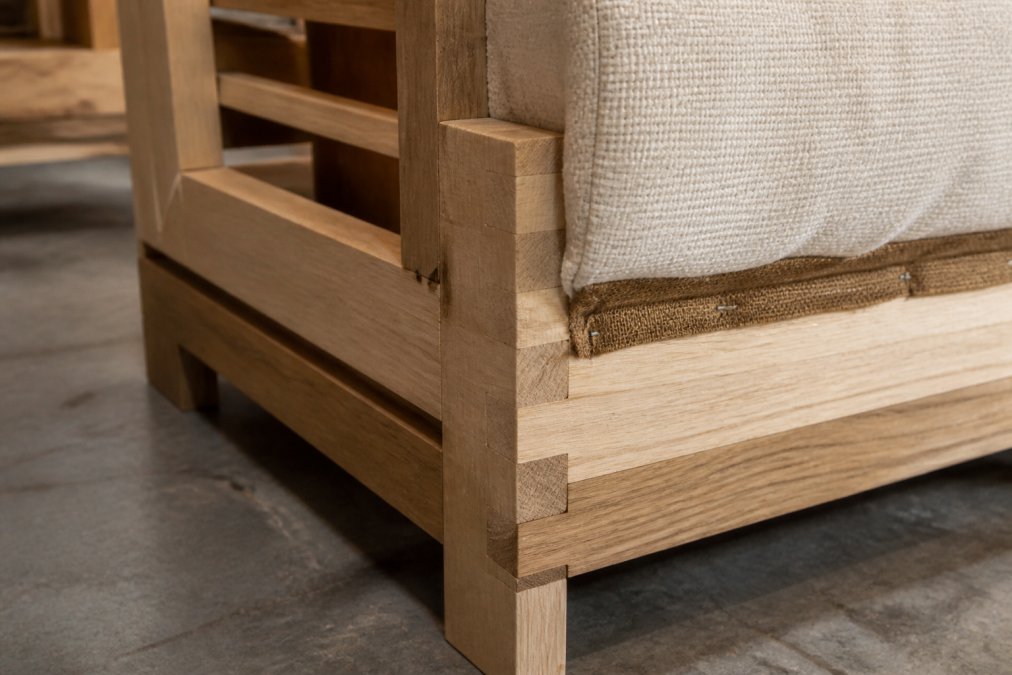
Home essentials retailers vary dramatically. Budget options often use engineered wood or particleboard frames, which can't handle repeated stress. Mid-range home essentials brands increasingly match Pottery Barn's frame standards, kiln-dried hardwood, proper joinery, and reinforcement, at substantially lower prices.
Case goods show similar patterns. Pottery Barn's dressers, cabinets, and shelving use solid wood construction with quality hardware. Their Modern Industrial Black Metal Brown Wood Sideboard combines engineered wood with solid powder-coated iron pipes for 165 lb weight capacity. Home essentials retailers offer comparable construction at lower price points, though you may sacrifice design refinement.

The real issue isn't which category uses better frames, but that quality varies within each. A $300 sofa from any retailer likely has a particleboard frame. A $1,200 sofa from a home essentials brand may have superior frame construction to a $1,500 Pottery Barn piece. Compare the specific product, not the brand name.
Upholstery, Fabrics, and Durability Standards
Fabric choice determines whether furniture looks pristine or worn after two years. Pottery Barn offers upholstery grades ranging from basic cotton blends to performance fabrics designed for high-traffic homes. Their higher-end pieces often use performance fabric, which resists staining and holds up to pets and children better than standard upholstery.
Home essentials brands increasingly offer performance fabric options, though they're less prominent in marketing. The difference often comes down to transparency: Pottery Barn clearly labels upholstery grade and material content. When shopping, demand specifics: fabric weight (measured in ounces per yard), fiber content, and stain resistance treatment.
Cushion density matters as much as fabric (peer-reviewed research). High-quality upholstered furniture uses high-density foam (3.0 lbs per cubic foot or higher) combined with down-blend or spring support systems. Pottery Barn's mid-to-premium pieces typically use this combination. Budget home essentials options often use lower-density foam that compresses quickly. Mid-range home essentials brands match Pottery Barn's cushion standards at lower price points.
Real wear-and-tear depends on maintenance. Pottery Barn pieces, because they're more expensive, tend to receive better care, owners use fabric protectant and address spills immediately. Home essentials pieces perform identically when given the same care. The difference isn't the furniture; it's owner investment in upkeep.
How to Spot High Quality Furniture Before You Buy
Develop a systematic evaluation method before spending money. Push down on the seat and listen, a quality frame produces minimal creaking. Flex the frame gently; it should feel solid, not wobbly. Open drawers and check the slides: they should glide smoothly without grinding. Poor drawer slides signal corner-cutting.

Examine the fabric closely. Run your hand across it, does it feel substantial or thin? Check seams: they should be straight and tight with no loose threads. Look at pattern alignment on patterned fabrics; misalignment indicates rushed manufacturing. Lift the furniture and check the underside. Quality pieces have finished bottoms with dust covers; cheap pieces expose raw particleboard and staples.
Ask specific questions before buying: What's the frame material? Kiln-dried hardwood is standard. What's the cushion density? Anything below 2.5 lbs per cubic foot will compress quickly. Is the fabric performance-treated? What's the warranty coverage? Pottery Barn typically offers 1-3 year structural warranties; home essentials brands vary widely.
Request fabric swatches before ordering online. Colors and textures look different on screens than in person. Quality retailers provide swatches freely; those that don't signal low confidence in their product.
Pottery Barn Alternatives on a Budget
You don't need Pottery Barn for quality furniture. Mid-range home essentials brands offer solid construction at 30-50% lower prices. The trade-off is usually design: home essentials pieces emphasize function and durability over trendy aesthetics.
Look for brands that clearly specify construction details: kiln-dried hardwood, foam density, fabric performance ratings. Brands that hide this information usually hide inferior materials. Check customer reviews for durability comments: "Still looks new after two years" is a green flag. "Sagging cushions after six months" is a red flag.
PracticalHomeEssentials.com curates pieces prioritizing durability and value. The Organic Sateen Bed Sheets Set at $49.99 uses 100% GOTS-certified organic cotton with sateen weave delivering luxury feel without Pottery Barn pricing (peer-reviewed research). The Shadmoor Australian Cotton Towels at $39.00 offer 600 GSM density and quick-drying performance comparable to high-end department store towels. The Modern Industrial Black Metal Brown Wood Sideboard Buffet at $134.53 combines engineered wood with solid iron pipes for 165 lbs weight capacity, structurally sound and versatile.

Match your actual needs to the product category. Pottery Barn excels at design-forward pieces where aesthetic matters. Home essentials brands excel at foundational pieces where durability and value drive the decision.
Is Pottery Barn Worth the Money? A Cost-Benefit Analysis
Pottery Barn's premium pricing reflects three factors: design, brand reputation, and customer service. Their pieces are professionally styled, featured in design magazines, and carefully curated for aesthetic consistency. If you're building a cohesive interior design, Pottery Barn's catalog makes that easier.
Brand reputation carries real value. Pottery Barn has invested decades in customer service, easy returns, and warranty support. They'll replace defective pieces without argument. That reliability costs money, and some buyers are willing to pay for it.
But Pottery Barn's prices don't consistently correlate with superior durability. A $1,200 Pottery Barn sofa with kiln-dried hardwood and high-density cushions isn't objectively more durable than an $800 home essentials sofa with identical construction. You're paying for design curation and brand confidence, not better materials.
Resale value matters if you move frequently or change decor often. Pottery Barn pieces hold resale value better than generic home essentials furniture. But if you're keeping furniture 10+ years, resale value becomes irrelevant.
For most households: buy Pottery Barn for statement pieces where design matters (focal-point sofas, dining tables you'll keep decades). Buy home essentials for foundational pieces where durability and value drive the decision (guest room furniture, office storage, bedding).
Customization, Warranty, and Long-Term Value
Customization options reveal how seriously a brand takes durability. Pottery Barn offers extensive customization: fabric choices, leg styles, cushion firmness, and lead times up to 12 weeks for made-to-order pieces. Long lead times reflect actual manufacturing rather than warehouse inventory, a signal of quality.
Home essentials retailers vary dramatically. Budget chains offer limited customization with short lead times. Mid-range brands increasingly offer customization options, though less prominently marketed. Customization availability indicates brand confidence in its production process.
Warranty coverage tells you what the brand will stand behind. Pottery Barn typically offers 1-3 year structural warranties covering frame defects. Home essentials warranties vary: budget brands often offer minimal coverage. Mid-range brands increasingly match Pottery Barn's standards. Always read the fine print.
Long-term value requires calculating total cost of ownership. A $1,500 Pottery Barn sofa with a 5-year lifespan costs $300 per year. A $900 home essentials sofa with a 7-year lifespan costs $129 per year. The cheaper sofa wins on cost-per-year, even if the Pottery Barn piece is nicer.
Sustainability matters increasingly. Pottery Barn has made public commitments to sustainable sourcing (ceres.org). Home essentials brands are less transparent. If environmental impact influences your decision, demand specifics about material sourcing and waste reduction.
| Factor | Pottery Barn | Home Essentials (Mid-Range) | Winner |
|---|---|---|---|
| Frame Quality | Kiln-dried hardwood, dovetail joinery | Often matches Pottery Barn | Tie |
| Cushion Density | High-density foam standard | High-density foam standard | Tie |
| Design Options | Extensive customization available | Limited customization | Pottery Barn |
| Lead Times | 8-12 weeks typical | 2-4 weeks typical | Home Essentials |
| Warranty Coverage | 1-3 years structural | Varies widely | Pottery Barn |
| Price Point | $1,200-3,000+ sofas | $600-1,500 sofas | Home Essentials |
| Cost Per Year (5-7 year lifespan) | $240-300/year | $120-180/year | Home Essentials |
| Resale Value | 40-50% recovery | 20-30% recovery | Pottery Barn |
| Sustainability Transparency | Moderate | Low | Pottery Barn |
The choice between home essentials and pottery barn quality comes down to what you value. Pottery Barn wins on design curation, customization, and brand confidence. Home essentials brands win on value, immediate availability, and cost-per-year durability. Neither category guarantees quality; both sell excellent and mediocre pieces at different price points.
The real skill is evaluating the specific product: frame construction, fabric durability, cushion density, warranty coverage. When you compare apples to apples (same frame material, cushion density, fabric performance), home essentials often deliver equivalent quality at lower prices. When paying Pottery Barn prices for design curation and brand reputation, you're making a legitimate choice, just understand what you're actually paying for.
At PracticalHomeEssentials.com, we focus on foundational pieces where durability and value matter most. Our curated selection emphasizes quality construction, transparent material specifications, and honest pricing. Whether you choose us or Pottery Barn, make an informed decision based on actual product quality, not brand prestige.
Frequently Asked Questions
What brand is comparable to Pottery Barn in terms of quality and affordability?
Several retailers offer comparable quality at lower price points. Look for brands using solid wood frames, kiln-dried hardwood construction, and performance fabrics. Check specifications for cushion density (typically 2.0-2.5 lbs per cubic foot indicates durability), frame reinforcement techniques, and warranty coverage. Many mid-range home essentials retailers provide similar construction standards as Pottery Barn without the premium markup, especially when you prioritize function over brand prestige.
How do you determine the quality of home furniture before buying online?
Examine the product specifications closely: look for solid wood frames (not particleboard), kiln-dried hardwood construction, and dovetail joinery. Check upholstery grade and fabric type (performance fabrics resist wear better). Request fabric swatches to verify color and texture match online images. Review warranty coverage length and what it covers. Read customer reviews specifically mentioning durability and wear-and-tear after 1-2 years. Ask about lead times and customization options, which indicate manufacturing quality. High-quality manufacturers typically offer detailed construction information and generous return policies.
Is Pottery Barn furniture actually solid wood, or is it mostly veneered?
Pottery Barn uses a mix of solid wood and veneered pieces depending on the product line. Their higher-end collections feature solid wood frames with kiln-dried hardwood and traditional joinery, while mid-range items often use engineered wood with veneer. The distinction matters: solid wood pieces handle wear and tear better and last longer, while veneered furniture can delaminate or chip over time. Always check product specifications before purchasing, as price point doesn't always indicate construction method. Many budget-friendly alternatives now offer solid wood frames at comparable or lower prices.
What should I look for to ensure furniture will last through multiple moves and style changes?
Prioritize solid wood frames, neutral color palettes, and versatile design aesthetics that work across different decor styles. Check frame reinforcement (corner blocks, metal brackets) and joinery quality. Select durable upholstery fabrics rated for high traffic use. Verify cushion density and whether they're removable for cleaning or replacement. Consider case goods (wood pieces like sideboards or shelving) that adapt to various rooms more easily than statement pieces. Review warranty coverage for frame and structural defects. Products with adjustable components or modular designs offer flexibility for different living spaces.
This article was written using GrandRanker