

Space-Saving Home Office Storage Hacks for Small Rooms
Table of Contents
- 1. Clear Desktop Storage Boxes for Easy Access
- Small Home Office Organization Ideas: Vertical Shelving and Wall-Mounted Storage
- 2. Collapsible Fabric Storage Bins for Hidden Clutter
- Small Office Storage Ideas: Multi-Purpose Furniture and Corner Solutions
- Under-Desk Storage Ideas: Drawers, Carts, and Cable Management
- Home Office Organization on a Budget: DIY and Affordable Hacks
- Filing and Document Organization for Small Spaces
- Conclusion: Maximize Your Small Home Office Today
- Frequently Asked Questions
Last Updated: October 15, 2026
1. Clear Desktop Storage Boxes for Easy Access
In a small room, every inch of desk space counts, which is why space saving home office storage solutions are essential. Clear desktop storage boxes reclaim that surface by keeping supplies visible and within arm's reach.

At PracticalHomeEssentials.com, we recommend the Clear Desktop Storage Box with Drawers for small home office spaces. This box measures 25×17×7.5cm and features multiple drawer compartments, making it ideal for organizing pens, sticky notes, paper clips, and other small stationery items.
Small items stay accessible and your desk stays clear for work.
Small Home Office Organization Ideas: Vertical Shelving and Wall-Mounted Storage
Your walls are the real estate you're not using. Vertical shelving turns unused wall space into storage without eating floor or desk area, the fastest way to multiply capacity in a small room.
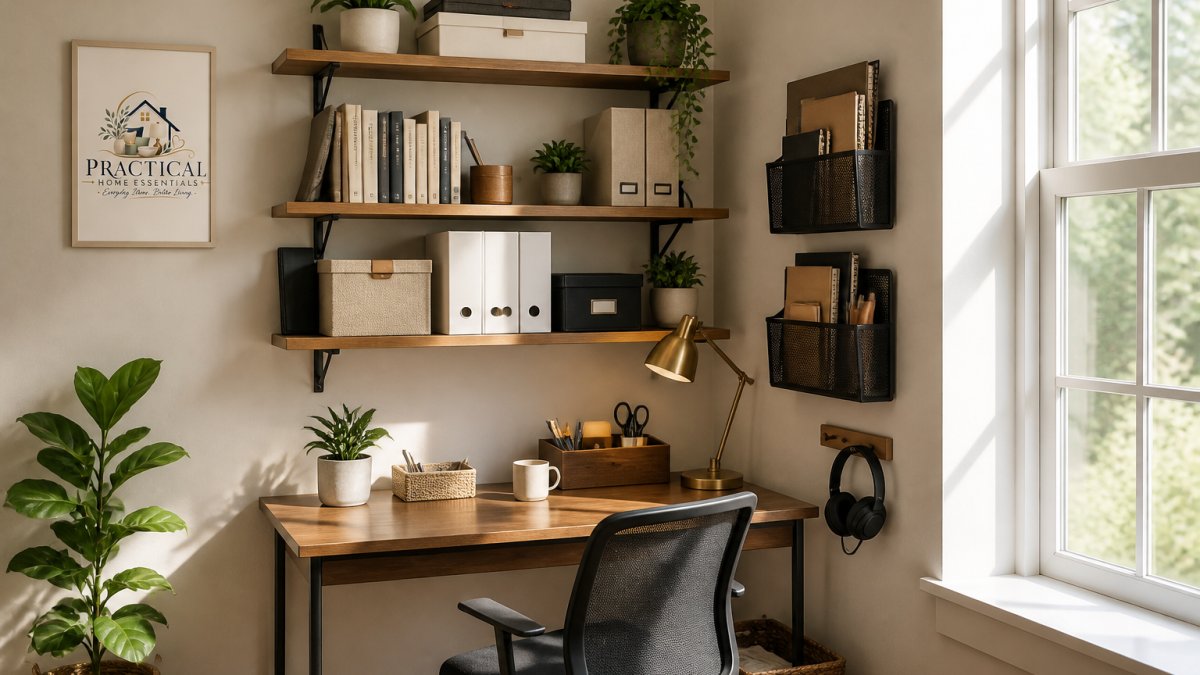
Floating shelves create storage without the visual weight of a bulky cabinet and take up zero floor footprint. One shelf can hold reference books, plants, or decor that makes the room feel less cramped.
Install shelves above your desk, behind your chair, or in wasted corners. Most walls handle 2-3 shelves; space them 12-18 inches apart for easy access.
Measure before you mount anything
The most common mistake is buying a shelf that blocks a door swing, drawer, or your chair's recline. Run this checklist first:
- Wall width: Measure the clear wall span and subtract at least 4 inches on each side so the shelf doesn't crowd a corner or trim.
- Shelf depth: Keep shelves 6-10 inches deep. Deeper shelves over a desk force you to lean back to see the monitor and can clip your head when you stand.
- Height above the desk: Leave 18-24 inches of clearance between the desktop and the bottom shelf so a monitor, lamp, or riser still fits.
- Chair clearance: If the shelf is behind your chair, confirm you can push the chair back at least 30 inches without hitting the wall or shelf.
- Stud location: Use a stud finder. A shelf holding books needs to hit studs or use rated toggle anchors; a lightweight display shelf can often use two anchors per bracket.
Renter-friendly, no-drill alternatives
If you rent or can't drill, these vertical options leave no damage:
- Tension-mounted vertical shelving: Pole-style units that brace between floor and ceiling add 4-5 tiers of storage in a footprint as small as 12 inches square. They work best against a solid ceiling and a level floor.
- Over-the-door organizers: A pocket organizer hung over the office door holds cables, notebooks, mail, and small tools without a single screw.
- Adhesive hook strips and removable mounting tabs: Rated for a few pounds each, these handle lightweight items like headphones, lanyards, and small clipboards. Follow the cure time on the package before loading them.
- Leaning ladder shelves: A freestanding ladder shelf leans against the wall and needs no hardware. Anchor it with the included strap for safety, especially in a room with foot traffic.
- Freestanding cube grids: Wire or plastic cube systems stack vertically and can be reconfigured as your needs change.
What to actually put on the wall
Vertical storage should move things off the desk, not display clutter. Prioritize weekly-use items, reference books, binders, backup supplies, decor, and keep daily items like pens and your phone on the desk. Anything untouched for a month belongs in a closed bin.
Corner and alcove opportunities
Corners are wasted space by default. A corner shelf or slim corner cabinet turns that zone into storage; a tall narrow shelf in an alcove can hold an entire category in under 2 square feet. Measure the alcove at its narrowest point so the unit slides in.
The result: items that would sit on your desk or in a filing cabinet are up and out of the way, and with the right anchors the setup stays safe and adjustable.
2. Collapsible Fabric Storage Bins for Hidden Clutter
Not everything needs to be on display. Collapsible fabric storage bins hide items you don't use daily, archived projects, seasonal supplies, old paperwork, while keeping them accessible.

They collapse flat when empty, expand when needed, and are lighter and quieter than plastic boxes, which matters in a small space.
The HOdo Home 3-Piece Collapsible Fabric Storage Bins come in white and grey, so they blend with most office decor instead of screaming "storage" at you.
Small Office Storage Ideas: Multi-Purpose Furniture and Corner Solutions
In a small space, every piece of furniture should do more than one job. Multi-purpose pieces, a desk with storage, a side table with shelves, let you fit everything without feeling cramped.
A side table with built-in storage is one of the smartest moves: a surface for your printer or coffee cup, plus shelves or drawers underneath for supplies.
The C-Shaped Side Table with Faux Marble Top and Storage Shelf fits perfectly in this category.
Corners are typically wasted space. A corner shelf, cabinet, or desk setup transforms that zone into valuable real estate, even a small shelf holds 3-4 books that would otherwise clutter your desk.
The real win: you're not adding pieces, you're replacing single-function items with double-duty ones, so the room feels intentional instead of crammed.
Under-Desk Storage Ideas: Drawers, Carts, and Cable Management
The space under your desk is prime real estate most people ignore. Under-desk storage keeps supplies within reach and cables organized so your setup looks professional.
Rolling carts fit under desks and pull out when needed, ideal if your desk lacks built-in drawers. A 2-3 shelf cart holds paper, folders, and supplies while keeping everything visible.
Clear Desktop Storage Box with Drawers →
For a more permanent solution, consider an under-desk drawer. The Under-Bed Storage Drawer with Wheels & Clear Window is designed for under-bed storage, but it works just as well under a desk.
Cable management separates a messy office from a clean one.
Anything under your desk should be on wheels or easy to reach. Keep frequently used items accessible and reserve harder-to-reach spots for monthly grabs.
Home Office Organization on a Budget: DIY and Affordable Hacks
You don't need to spend thousands to organize a small office. Many solutions cost under $30, and some are free if you repurpose what you own.
Start with what you own: a mason jar holds pens, a basket corrals cables, a shoebox organizes papers.
For new purchases, solve your biggest problem first: papers mean a filing system, cable chaos means clips, scattered supplies mean a storage box.
The Over-Cabinet Door Storage Hook is a perfect example of affordable, high-impact storage.
The budget mindset: start small, buy only what you need, and upgrade as your office evolves. Focus on organizing what you have.
Filing and Document Organization for Small Spaces
Paper piles are one of the biggest space-killers in a small office. The fix isn't a bigger cabinet, it's reducing paper at the source, then storing only what you must keep in minimal space.
Step 1: Cut the paper volume before you file anything
Work through these categories:
- Scan and shred: Receipts, statements, paid bills, and routine correspondence can almost always be digitized and the paper recycled.
- Check retention rules: The IRS generally recommends keeping tax returns and supporting records for three years from the filing date, and up to seven years in some situations such as claiming a loss on worthless securities or filing a claim for a credit or refund (How long should I keep records?). Confirm current guidance at IRS recordkeeping guidance before shredding anything tax-related.
- Keep originals: Birth certificates, Social Security cards, passports, property deeds, and similar vital documents belong in a fireproof safe or safe deposit box, not a desk drawer.
- Toss duplicates: If you can find the same document in an online account or email, you don't need the paper copy.
Step 2: Build a scanning workflow that actually gets used
Set up a routine that takes minutes:
- Pick a scan destination. A cloud storage account with folder sync keeps files searchable and backed up. Choose one service and stick with it.
-
Name files consistently. Use a format like
YYYY-MM-DD_vendor_purposeso documents sort chronologically and are findable by keyword. - Use a folder structure that mirrors your life, not your filing cabinet. Common top-level folders: Taxes, Medical, Financial, Home, Work, Warranties.
- Scan in batches. Keep a single "to scan" tray on the desk. When it fills, scan the whole stack at once instead of one page at a time.
- Shred after you verify. Confirm the scan is legible and backed up before the paper goes in the shredder.
Step 3: Store the paper you must keep in the smallest footprint possible
For documents that must stay physical, vertical filing beats horizontal stacking. A vertical file box or slim two-drawer cabinet uses less floor space than a paper stack and keeps everything findable.
- Vertical file boxes: A standard letter-size box holds roughly 700-1,000 sheets and fits on a shelf or under a desk.
- Hanging file folders: One folder per category, with a clear plastic tab label. Color-code by category if you have several.
- Mesh zipper pouches: Good for receipts, warranties, and project paperwork you need to grab and carry. The A4 Mesh Zipper Document Storage Folder at $27.30 keeps a category contained and visible without a full cabinet.
- Binders with sheet protectors: Best for reference material you flip through, like manuals or certificates.
Step 4: Keep the system from collapsing
Give incoming paper one home, a desk inbox tray, and clear it weekly. Once a year, shred what's past its retention window.

The space math
A filing cabinet occupies roughly 2-3 square feet; replacing it with a shelf-top file box and a cloud account reclaims that footprint.
Conclusion: Maximize Your Small Home Office Today
A small office doesn't have to feel cramped. Use vertical space, choose multi-purpose furniture, and keep only what you need. Start with one solution, a desktop box, wall shelves, or under-desk drawers, and build from there.
Fitting everything into a small home office without sacrificing comfort or productivity is the challenge. PracticalHomeEssentials.com makes it easier with affordable storage solutions designed for real offices, from clear desktop boxes that keep supplies visible to collapsible bins that hide clutter. Choose from our curated selection, take advantage of free shipping on your order, and transform your small office into a space that actually works for you.
Frequently Asked Questions
How can I add storage to a small home office without taking up floor space?
Use vertical storage with floating shelves, wall-mounted cabinets, and over-door organizers to maximize unused wall space. Vertical shelving keeps your work surface clear while storing books, supplies, and files. Pair wall solutions with under-desk drawers and multi-purpose furniture like the C-Shaped Side Table with Faux Marble Top and Storage Shelf ($157.99) to create layers of storage that don't consume valuable floor space in your small home office.
What are inexpensive ways to organize a small home office?
Budget-friendly storage hacks include collapsible fabric storage bins ($12.35 for a 3-piece set), clear desktop storage boxes ($21.16), and over-door hooks ($15.00). These affordable options let you organize without major furniture purchases. Combine them with items you already own, mason jars for pens, small baskets for papers, and use vertical space creatively.
What should I do with documents and files in a small office?
Use compact filing solutions like the A4 Mesh Zipper Document Storage Folder ($27.30) to keep papers organized and accessible without a bulky filing cabinet. Store document folders vertically in a drawer or on a shelf to save space. Consider digitizing important papers to reduce physical clutter, then keep only active files in your small space. Label everything clearly so you can find what you need quickly without wasting time searching through disorganized stacks.
How do I organize under my desk in a small home office?
Under-desk storage ideas include rolling carts, under-desk drawers, and cable trays. The Under-Bed Storage Drawer with Wheels and Clear Window ($29.00) works well under desks for storing supplies and documents. Use cable management systems to keep cords organized and out of sight, which makes your small space feel less cluttered. Rolling storage lets you access items easily and move them when you need more leg room or want to rearrange your layout.