

Are Multifunctional Furniture Pieces Worth It?
Table of Contents
- What Multifunctional Furniture Actually Is
- The Real Benefits of Multifunctional Furniture
- Multifunctional Furniture for Small Spaces: Space-Saving Reality
- Sofa Bed Pros and Cons: A Practical Look
- Storage Bed Worth It: Cost, Durability, and Everyday Use
- The Hidden Costs and Trade-Offs You Should Know
- How to Decide if Multifunctional Furniture Is Right for You
- Frequently Asked Questions
Last Updated: October 9, 2026
What Multifunctional Furniture Actually Is
Multifunctional furniture pieces are designed to serve two or more purposes in a single item. A sofa bed converts from seating to sleeping space. A storage ottoman holds blankets while providing a place to rest your feet. A lift-top coffee table becomes a work surface when you raise the top.
These pieces combine form and function. They save floor space by eliminating the need for separate items. Instead of buying a bed and a couch, you get one piece that does both jobs.
The appeal is obvious in tight living spaces. But multifunctional furniture makes sense for anyone trying to be intentional about what they own. Customers shopping for small apartments often ask the same question: is multifunctional furniture worth it, or are they just a marketing gimmick?
That's the real question. Let's be honest about what multifunctional furniture can and cannot do.
The Real Benefits of Multifunctional Furniture
The biggest advantage is space efficiency. A sofa bed takes up roughly the same footprint as a regular sofa. But it also provides a sleeping surface for guests. You're not sacrificing seating to gain a bed, or vice versa.
Flexibility matters too. Your needs change. A room that's a living space during the day might need to function as a guest bedroom at night. Multifunctional pieces adapt without requiring a complete redesign.
Cost savings can be real, but they're not automatic. A quality sofa bed costs more than a basic sofa.
Clutter reduction is underrated. Storage ottomans, nesting tables, and lift-top coffee tables hide items that would otherwise sit on shelves or take up floor space. Less visible clutter makes a room feel larger and calmer.
Multifunctional Furniture for Small Spaces: Space-Saving Reality
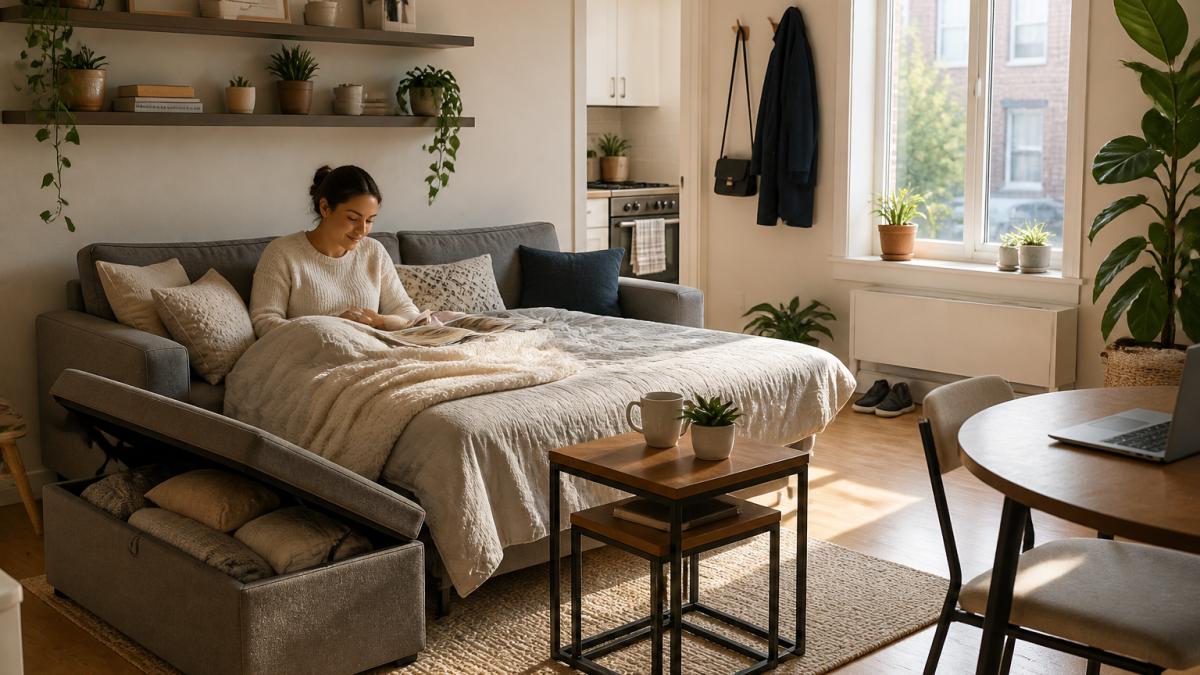
Small apartments and studios demand smart choices. Multifunctional furniture is one of the few strategies that actually works in tight quarters.
A wall bed (Murphy bed) folds up during the day to free the entire floor. A storage bed uses the space under the mattress for blankets, seasonal items, or off-season clothing. An extendable dining table grows from a compact surface to full size only when you need it.
The real-world benefit: your 400-square-foot apartment doesn't feel like a bedroom, a kitchen, and a hallway. It feels like a living space that adapts to what you're doing right now.
But here's what most guides miss. Space-saving only works if the conversion mechanism is easy to use. A sofa bed that takes 20 minutes to unfold and requires moving three pieces of furniture gets used once. Then it sits in sofa mode permanently. A Murphy bed that drops down smoothly gets used regularly.
For small-space living, test the conversion in person before buying. Watch how it operates. Count the steps. Imagine doing it on a Tuesday night when you're tired.
Sofa Bed Pros and Cons: A Practical Look
Sofa beds are the most common multifunctional piece. They're affordable, familiar, and don't require installation.
Pros:
- Guest sleeping space without a dedicated bedroom
- No special installation needed
- Reasonable price range for quality options
- Works in most living rooms without looking unusual
Cons:
- The mattress is thinner than a standard bed (most are 4-6 inches)
- Nightly use gets uncomfortable quickly
- The frame adds weight, making the sofa harder to move
- The seating surface feels different from a regular sofa once it's a bed
- Converting takes time and effort
Real talk: a sofa bed works best for occasional guests. If someone stays with you multiple nights per week, they need a proper bed. A sofa bed becomes a compromise that satisfies nobody after night two.
The seating quality matters. Some sofa beds feel like sitting on a mattress. Others have a proper cushioned seat. Test before you buy. Sit on it for five minutes. Lie on it for five minutes. That's your reality.
Storage Bed Worth It: Cost, Durability, and Everyday Use
A storage bed trades a standard bed frame for one with drawers, shelves, or a lift-top platform. You gain storage capacity without adding floor space. The question is whether the mechanism holding that storage together survives daily use.
The three storage-bed mechanisms, and what each one costs you over time:
- Drawer beds. Two to four drawers built into the base, usually on metal ball-bearing slides. Cheapest to buy and easiest to repair, because slides are standardized and replaceable. The trade-off: drawers need clearance to open, so they don't work against a wall or in a tight corner.
- Lift-up platform beds. The entire mattress platform raises on gas struts or hydraulic pistons to reveal a full-length storage cavity. This gives the most storage volume, but the struts are the failure point. Gas struts lose pressure over time and are typically rated for a set number of cycles, so a bed you open daily will need strut replacement years before the frame wears out.
- Side-storage and headboard beds. Shelves, cubbies, or drawers built into the sides or headboard. Lowest mechanical risk because there are few moving parts, but also the least usable volume.
Durability by mechanism. A sofa bed gets used occasionally. A storage bed operates every single day, and that changes what matters. Drawer slides are the most repairable component, a stuck or broken slide is usually a direct swap.
What to check before buying:
- Open and close every drawer and the lift mechanism yourself, in the store, at least three times.
- Confirm the drawer slides are rated for the weight you plan to store. Lightweight slides sag under heavy loads.
- Check whether replacement struts or slides are sold separately. If they aren't, a single failed part can retire the whole bed.
- Look at how the platform is supported. A center support rail prevents the mattress from sagging on larger sizes.
Cost reality. A basic platform bed with drawers sits at the low end. A bed with a hydraulic lift-top and side storage runs significantly higher, and the extra cost buys smoother operation and longer durability, not more storage volume. The honest comparison isn't storage bed versus plain bed.
Everyday use. Storage you can't reach is storage you won't use. Deep drawers that require lifting a heavy mattress to access get filled once and forgotten. The pieces that earn their keep are the ones where the secondary function takes seconds, not minutes, to reach.
The Hidden Costs and Trade-Offs You Should Know
Most guides stop at the sticker price. That's the wrong number. The real question is total cost of ownership, what you pay across the life of the piece, not just at checkout. Here's the framework competitors skip.
The full cost stack for a multifunctional piece:
- Purchase price. A convertible or storage piece typically costs more than its single-purpose equivalent. That premium is the entry fee for the extra function.
- Delivery. Convertible sofas, wall beds, and lift-top beds are heavy and often ship freight rather than parcel. Freight delivery, threshold drop, and in-home placement can each be a separate line item.
- Assembly. Wall beds and lift-top beds frequently require anchoring to studs and two-person assembly. If you're not doing it yourself, budget for a handyman.
- Maintenance. Moving parts need attention: tightening hardware, lubricating slides, and checking strut pressure. This is small but recurring.
- Repair. This is where the math turns. A ripped cushion on a standard sofa is a straightforward fix. A failed lift mechanism or stripped hinge on a convertible piece often requires a specialist or a manufacturer part.
- Replacement and lifespan. A single-purpose sofa might last a decade with no moving parts to fail. A convertible piece's lifespan is capped by its weakest mechanism, not its frame or upholstery.
The break-even test. Compare the all-in cost of one multifunctional piece against the all-in cost of the separate items it replaces, including delivery and assembly for each. If you'd genuinely buy both a sofa and a guest bed, the convertible option usually wins. If you'd only buy the sofa and occasionally improvise a sleeping arrangement, the premium is money spent on a function you rarely use.
The trade-offs that don't show up in reviews:
- Weight. A sofa bed weighs more than a sofa; a storage bed weighs more than a frame. That matters if you move, rearrange, or live upstairs.
- Aesthetics. A sofa bed looks like a sofa until the mattress shows. Storage-bed drawers that don't close flush look sloppy. These pieces demand attention to detail that single-purpose furniture doesn't.
- Conversion friction. If the mechanism is annoying, you won't use it. A wall bed that operates smoothly gets used; one that sticks or requires moving furniture stays in one position. Test the mechanism yourself before committing.
- Space savings are real but bounded. A sofa bed still needs floor space for a person to lie on it. You're not gaining a full extra room, you're gaining flexibility within the same footprint.
End-of-life. Multifunctional pieces use more material and more hardware than simple furniture, and mixed-material construction (upholstery, foam, metal mechanisms, engineered wood) is harder to recycle or resell. A piece with replaceable parts lasts longer and delays disposal, which is the more practical environmental lever than the material itself.
How to Decide if Multifunctional Furniture Is Right for You
Ask yourself three questions.
First: Will you actually use the secondary function? If you need a guest bed once a year, a sofa bed makes sense. If guests stay weekly, get a proper bed for them.
Second: Is the conversion mechanism something you'll use regularly? A lift-top coffee table that rises smoothly gets used. One that's stiff or awkward sits in one position. Watch it operate.
Third: How long do you plan to stay in your current space? Multifunctional pieces shine in small apartments where you're maximizing every square foot.
When you're evaluating options, focus on the mechanism quality and the primary function first. The secondary function is a bonus, not the main reason to buy.
Consider durability in your decision. A cheaper sofa bed might seem like a win initially. But if the mattress sags after a year or the frame loosens, you've wasted money.
Storage capacity matters too. A storage bed with shallow drawers that hold only lightweight items provides less practical benefit than one with deep drawers.
Multifunctional furniture solves real problems in small spaces. But it's not a magic solution.
Frequently Asked Questions
What are the main benefits of multifunctional furniture?
Multifunctional furniture reduces the number of pieces you need to buy, saving floor space and money. A sofa bed eliminates the need for a separate guest bed. Storage ottomans provide seating while hiding clutter. Lift-top coffee tables offer workspace and storage in one piece. For renters and small-space dwellers, these pieces adapt to changing needs without requiring a full furniture replacement.
Is a sofa bed worth buying for everyday use?
It depends on your actual sleeping needs. If you host overnight guests regularly, a quality sofa bed can justify the cost. However, everyday sofa beds often sacrifice comfort, the mattress is thinner, the frame can feel unstable, and nightly conversion becomes tedious. For primary sleeping, a dedicated bed outperforms most sofa beds. Reserve them for occasional guest use or temporary situations.
Is a storage bed worth the extra cost?
Storage beds typically cost 20-40% more than standard frames but deliver real value in small spaces and homes with clutter challenges. The durability of the conversion mechanism matters: quality drawers with ball-bearing slides last years, while cheap ones jam quickly. Calculate whether the storage eliminates your need for a dresser or closet organizer. If it does, the total cost of ownership favors the storage bed.
How do you choose multifunctional furniture for a small apartment?
Prioritize pieces that solve your actual problems, not theoretical ones. If you lack seating, a storage ottoman works. If you need a guest bed, a quality sofa bed beats a fold-out couch. Measure your space and test conversion mechanisms in person, online photos hide friction points. Choose neutral colors and simple designs so pieces adapt if you move. Avoid stacking too many functions in one piece; a bed that also has a desk attachment often does neither well.