

Modern Minimalist Decor for Living Rooms
Table of Contents
- 1. Master Neutral Color Palettes for Minimalist Living Rooms
- 2. Optimize Natural Light and Ambient Lighting
- 3. How to Declutter Your Living Room: A Step-by-Step Approach
- 4. Functional Storage Solutions That Hide Clutter
- 5. Best Minimalist Furniture for Small Spaces
- 6. Add Texture and Layering Without Clutter
- 7. Incorporate Natural Elements and Intentional Accents
- Frequently Asked Questions
Last Updated: September 3, 2026
Creating a modern minimalist living room doesn't require a complete overhaul or a luxury budget. Modern minimalist decor for living rooms centers on intentional design choices that eliminate visual clutter while maximizing comfort and function. At PracticalHomeEssentials.com, we help homeowners and renters transform their spaces using simple, practical strategies that work in any size room. Below, we'll show you exactly how to build a minimalist living room that feels calm, spacious, and genuinely livable.
The challenge most people face isn't knowing what minimalism looks like, it's figuring out how to actually live in a minimalist space without sacrificing comfort or personality. This guide covers seven proven approaches that balance clean lines with warmth, neutral palettes with character, and intentional living with real-world practicality.
1. Master Neutral Color Palettes for Minimalist Living Rooms
A neutral color palette forms the foundation of modern minimalist decor for living rooms. The best approach uses three to four base colors: white, cream, soft gray, or warm beige. These tones create visual calm and allow you to layer in texture and intentional accents without overwhelming the space.
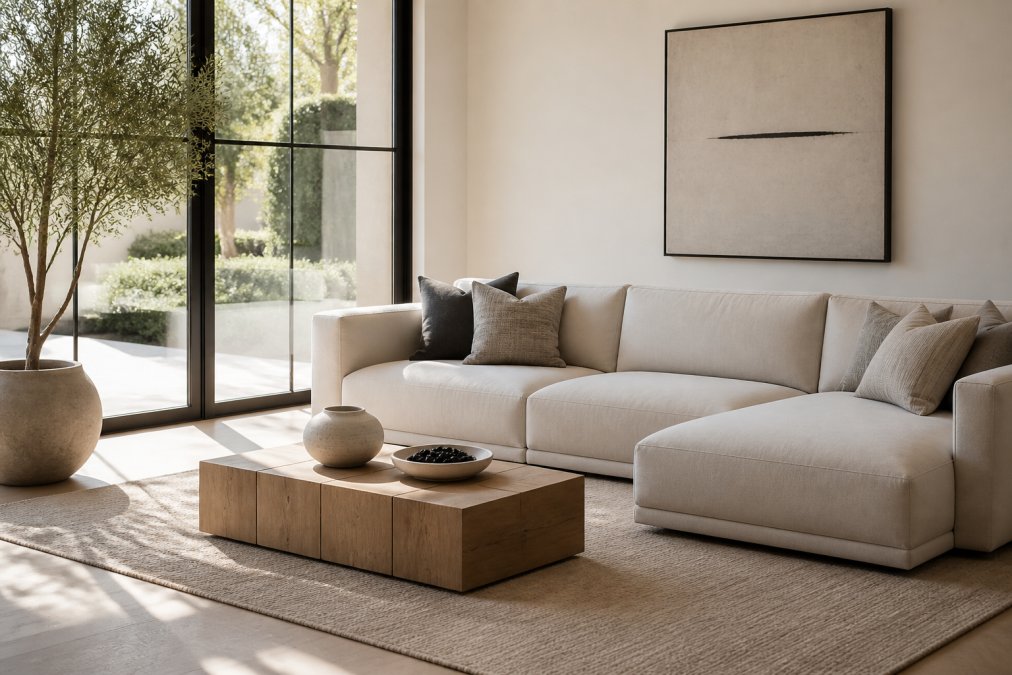
Neutrals work because they recede visually, making rooms feel larger and more open. The key is choosing warm versus cool neutrals based on your natural light. North-facing rooms benefit from warm whites and creams that combat cool shadows. South-facing spaces work well with cooler grays that prevent the room from feeling too yellow or washed out.
One mistake many people make is treating neutrals as boring. Earth tones, warm grays, soft taupes, and muted ochres, bring sophistication to minimalist spaces. These colors pair beautifully with natural materials like wood and stone, creating what designers call "warm minimalism." The restraint comes from limiting your palette, not from choosing cold, sterile colors.
When selecting paint or larger pieces, consider how the color shifts throughout the day. A neutral that looks perfect in the showroom might feel dingy or overly warm in your specific space. Order samples and live with them for a few days before committing. This simple step prevents costly repaints and ensures your neutral palette actually complements your room's unique light conditions.
2. Optimize Natural Light and Ambient Lighting
Natural light is the minimalist's best tool. It reveals clean lines, highlights texture, and makes spaces feel larger without adding a single piece of furniture. Maximize daylight by keeping windows unobstructed and using sheer window treatments that filter light without blocking it entirely.
Artificial lighting matters equally in a minimalist room. The goal is to create layers: ambient light for general illumination, task lighting for specific activities, and accent lighting to highlight intentional design elements. Avoid overhead ceiling fixtures that cast harsh shadows. Instead, position floor and table lamps strategically to create warm pools of light.
The American Lighting Association's guidance on residential lighting recommends 10-20 footcandles for living areas, which translates to soft, warm light that feels inviting rather than clinical. Minimalist spaces benefit from dimmable fixtures that adapt to different times of day and moods. A simple floor lamp with a three-touch dimmer, like PracticalHomeEssentials.com's Kai Table Lamp at $79, gives you precise control without visual clutter.


Brass and matte black finishes work well in minimalist settings because they complement neutral palettes without drawing attention. The Elizabeth Floor Lamp ($119) pairs a sophisticated brass finish with a hanging glass shade, creating statement lighting that doesn't compete with the room's calm aesthetic. Position lamps near seating areas or reading corners to create functional zones without dividing the space visually.
3. How to Declutter Your Living Room: A Step-by-Step Approach
Decluttering is the foundation of minimalist living. The process isn't about owning nothing, it's about keeping only items that serve a purpose or bring genuine joy. Start by removing everything from one area, then intentionally return only what you actively use or truly value.
A systematic decluttering approach works better than random tidying. Begin with the least emotionally attached category, books, decor, or media, before moving to items with sentimental value. This builds momentum and clarifies your decision-making process. Many people find they can remove a significant portion of their belongings without missing them.
Here's a practical framework for decluttering your living room:
| Step | Action | Timeline | Frequency |
|---|---|---|---|
| 1. Remove Everything | Clear one section completely | 1-2 hours | One-time |
| 2. Sort into Categories | Group similar items together | 30 minutes | One-time |
| 3. Evaluate Each Item | Keep, donate, or discard | 2-3 hours | One-time |
| 4. Return Intentionally | Place only kept items back | 1 hour | One-time |
| 5. Maintain Weekly | Return items to designated spots | 15 minutes | Weekly |
The hardest part isn't the initial purge, it's preventing reclustering. Assign a specific home for every item you keep. If something doesn't have a designated spot, it doesn't belong in your minimalist space. This simple rule prevents the slow creep of clutter that derails most minimalist efforts.
A common mistake is keeping items "just in case." Minimalist living requires accepting that you can replace something if you actually need it later. This mindset shift, from hoarding to trusting yourself to adapt, is what makes minimalism sustainable long-term.
4. Functional Storage Solutions That Hide Clutter
Hidden storage is essential in minimalist spaces. The goal is to keep daily-use items accessible while removing visual clutter from sight. Closed storage, cabinets, drawers, and shelving with doors, creates the clean lines that define modern minimalist decor for living rooms.
The Black Wood Buffet Kitchen Dining Sideboard Storage Cabinet ($281.49) demonstrates intelligent storage design. Its glass sliding doors reveal curated items while concealing everyday clutter. The two interior shelves maximize storage capacity without adding visual bulk. This piece works in living rooms as a media console or display cabinet.
Built-in solutions work best when possible, floating shelves with matching backing, wall-mounted cabinets, or under-sofa storage benches. If built-ins aren't an option, choose furniture pieces that serve dual purposes. A coffee table with hidden compartments, a storage ottoman, or a console table with closed shelving keeps necessities out of sight while maintaining clean lines.
The key metric for functional storage is accessibility. Items you use weekly should be within arm's reach. Seasonal or occasional items can live in higher shelves or less visible areas. This hierarchy prevents the common problem where hidden storage becomes a dumping ground for items you never use but can't quite discard.
When selecting storage furniture, prioritize materials that match your neutral palette and existing pieces. Wood tones, soft grays, and matte finishes integrate seamlessly into minimalist spaces. Avoid ornate hardware or decorative details that compete with the room's restrained aesthetic.
5. Best Minimalist Furniture for Small Spaces
Choosing the right furniture is critical in minimalist design, especially in smaller rooms. The rule is simple: every piece must earn its place through function or beauty, ideally both. Low-profile furniture, sofas with slim legs, tables with clean lines, creates visual lightness and makes rooms feel more spacious.
Scale matters enormously. Oversized furniture dominates small spaces and creates visual clutter even when the room is otherwise empty. A sofa should fit the room proportionally, leaving at least 18 inches of walking space on all sides (asid.org). Similarly, a coffee table should be roughly two-thirds the length of your sofa, not a massive focal point.
For minimalist living room furniture, prioritize pieces with:
- Clean, straight lines without ornamental details
- Neutral upholstery or natural wood finishes
- Multi-functional design (storage ottomans, nesting tables, murphy desks)
- Slim profiles and visible legs that don't block sight lines
Lighting fixtures count as furniture in minimalist spaces. The Logan Floor Lamp ($199) exemplifies minimalist furniture principles. Its marble base and brass finish add warmth without visual bulk. The arc design extends light across the room without requiring a ceiling fixture, making it ideal for renters or anyone avoiding permanent installations.
One often-overlooked strategy: fewer, larger pieces create a cleaner aesthetic than many small items. A single substantial sofa with a side table and floor lamp feels more intentional than a sectional, three side tables, and multiple lamps. This principle, restraint through consolidation, defines modern minimalist decor for living rooms.
6. Add Texture and Layering Without Clutter
Texture prevents minimalist spaces from feeling cold or sterile. The trick is layering different tactile surfaces without adding visual clutter. Natural materials, wood, stone, linen, wool, provide warmth and visual interest while maintaining the minimalist aesthetic.
Layering works through strategic placement of textured items. A woven throw blanket draped over a sofa adds softness and warmth. The Fennco Styles Rhombus Diamond Knit Modern Fringe Throw ($29.99) provides geometric visual interest through its diamond knit pattern while the neutral colorway maintains the calm palette. At 50 by 60 inches, it's substantial enough to create impact without overwhelming the space.

Texture layering includes:
- Soft textiles (throws, cushions, area rugs)
- Natural materials (wood, stone, plants)
- Geometric patterns (geometric shapes in throws, pillows, or wall art)
- Mixed finishes (matte, glossy, natural patina)
An area rug grounds the seating area and adds softness underfoot. The Luxurious Velvet Rectangular Shaggy Plush Carpet Rug ($45) provides plush comfort with a modern aesthetic. Its soft texture contrasts beautifully with hard surfaces like wood and stone, creating visual and tactile balance.
The restraint comes from limiting how many textures you layer. Three to four primary textures, perhaps wood, linen, wool, and stone, create richness without chaos. Avoid mixing too many patterns or finishes, which undermines the calm that defines minimalist spaces.
7. Incorporate Natural Elements and Intentional Accents
Natural elements, wood, stone, plants, natural light, form the heart of warm minimalism. These materials age beautifully, develop character over time, and connect indoor spaces to the natural world. A single wooden side table or stone lamp base becomes a focal point in a minimalist room precisely because everything else is intentionally restrained.
The Neptune Table Lamp ($139) demonstrates how natural materials elevate minimalist spaces. Its travertine base showcases unique stone variations, making each lamp genuinely one-of-a-kind. This authenticity, real variation rather than manufactured uniformity, defines intentional minimalist design.
Plants serve dual purposes in minimalist living rooms. They add organic texture, improve air quality, and introduce the only color many minimalist spaces include. A single large plant or a small cluster of three identical pots creates visual interest without clutter. Low-maintenance varieties like pothos, snake plants, or monstera work well in minimalist settings because they require minimal fussing.
Intentional accents differ from clutter. An accent is a single, carefully chosen item that reflects your personality or values. This might be a piece of art, a sculptural object, or a book you genuinely love. The key is limiting yourself to one or two accents per room. More than that tips the space from minimalist to eclectic.
According to interior design principles from the American Society of Interior Designers, intentional design creates spaces that feel curated rather than sparse. The difference lies in purposefulness. Every item in your minimalist room should answer the question: "Why does this belong here?" If you can't articulate a clear answer, functional need, aesthetic value, or personal meaning, the item is clutter, not an accent.
Creating modern minimalist decor for living rooms requires balancing simplicity with livability. The spaces that work best aren't austere or uncomfortable, they're intentional. You've learned how to build a neutral foundation, optimize lighting, declutter strategically, and layer in warmth through texture and natural materials.
PracticalHomeEssentials.com makes this process simpler with curated products designed specifically for minimalist spaces. From the Kai Table Lamp ($79) with its stripped-down brass design to the Fennco Throw ($29.99) that adds texture without clutter, every piece supports the minimalist aesthetic. Start with one section of your room, master your neutral palette, optimize your lighting, and add one intentional accent. That single, well-designed corner becomes your blueprint for the entire space. Get started with PracticalHomeEssentials.com and build a living room that feels calm, spacious, and authentically yours.
Frequently Asked Questions
What are the essential elements of modern minimalist decor?
Modern minimalist decor centers on clean lines, neutral palettes, and intentional spacing. Essential elements include functional furniture with no ornamental details, hidden storage solutions, natural materials like wood and stone, and a restrained approach to accessories. The goal is to keep only items that serve a purpose or bring genuine joy, creating visual balance through negative space rather than filling every corner.
How do I choose a color palette for a minimalist living room?
Start with a neutral base of whites, grays, beiges, or soft earth tones. These colors create calm and allow architectural features and textures to stand out. Add depth by varying shades within the same color family, pair light cream walls with darker gray furniture, for example. Introduce one optional accent color sparingly through textiles or a single statement piece. This approach keeps your space cohesive while maintaining the clean aesthetic minimalism requires.
How can I make my minimalist living room feel warm instead of cold?
Warm minimalism incorporates natural materials, soft textiles, and layered lighting. Use wooden furniture or accents, add a plush throw blanket like the Fennco Styles geometric throw ($29.99), and include soft ambient lighting from lamps such as the Emma Floor Lamp ($129.00) or Mushroom Table Lamp ($99.00). Natural stone elements, like the Neptune Table Lamp's travertine base ($139.00), also add warmth. The key is balancing minimalism's restraint with tactile, inviting materials.
Is minimalism still popular in 2026?
Yes, minimalism remains a dominant design trend. The shift toward intentional living, mental clarity, and sustainability continues to drive interest in minimalist spaces. Many people seek relief from visual clutter and information overload, making minimalist living rooms an attractive choice. The trend has evolved to include warmer, more personalized minimalism that combines clean lines with comfort and natural elements.
This article was written using GrandRanker