

Is a Label Maker Worth It for Home Organization?
Table of Contents
- The Real Cost of Label Makers vs. Long-Term Value
- Key Benefits That Justify the Investment
- Best Label Maker Organization Ideas for Every Room
- Label Maker vs. Handwritten Labels: Which Wins?
- Choosing the Best Label Maker for Home Organization
- Pairing Label Makers with Storage Solutions
- Conclusion: Is It Worth It for Your Home?
- Frequently Asked Questions
Last Updated: September 25, 2026
The Real Cost of Label Makers vs. Long-Term Value
Deciding whether a label maker worth it for home organization comes down to usage frequency and cost per label versus handwriting.
Label makers eliminate visual clutter from inconsistent handwriting and create a polished aesthetic that encourages long-term maintenance. But the investment question requires looking beyond the sticker price.
Initial Purchase Cost vs. Ongoing Tape Expenses
Basic tape-based label makers cost $25-$50, while thermal models cost $60-$150 upfront. Tape cartridges ($8-$15 each) yield 50-100 feet; a typical home organization project uses one to two cartridges yearly, adding $16-$30 in year one and $15-$30 annually.
Thermal paper rolls cost $5-$10 and produce 150-300 feet of labels. Over five years, tape-based systems cost $100-$200 in cartridges versus $25-$50 for thermal paper, making thermal models cost-effective within two to three years.
Cost Per Label and Payback Timeline
Handwritten labels fade in three to six months and require constant replacement. Printed labels cost $0.05-$0.15 each and last two to five years. For 100 containers, printed labels cost $5-$15 versus hours of handwriting and repeated replacement.
The real payback comes from preventing duplicate purchases and reducing waste. At consumer research on home organization spending, households typically spend $200+ annually on storage and organizational supplies, often because they can't find what they already own and buy duplicates. A label maker that prevents even two or three duplicate purchases in a year, a duplicate box of pasta, duplicate cleaning supplies, duplicate office items, has paid for itself entirely. For families managing multiple pantries, seasonal storage, or shared workspaces, the payback is often within the first three months.
Tape Width and Label Size Impact on Cost
Wider tape (½-1 inch) covers larger surfaces with fewer labels; narrower tape (¼ inch) requires more labels. Tape-based systems require multiple cartridge types for different widths, while thermal systems adjust width within a single roll, reducing waste.
The Durability Factor
Printed labels survive moisture and temperature changes for years, while handwritten labels fade in months. Consistent fonts and formats create visual organization that's easier to maintain and encourages adherence to the system.
Key Benefits That Justify the Investment
Label makers create accountability in shared spaces and enable inventory management with purchase dates and expiration information. Thermal labels stick to plastic, glass, metal, and fabric surfaces.
For remote workers setting up a home office, a label maker transforms workspace efficiency. Labeled drawers, file organizers, and supply containers create a professional environment that supports focus. The workplace organization impact study shows that organized workspaces reduce cognitive load and decision fatigue.
Sustainability is another underrated benefit. When you have a proper labeling system, you're less likely to buy duplicate items because you forgot what you already owned. This reduces waste and unnecessary spending.
Best Label Maker Organization Ideas for Every Room
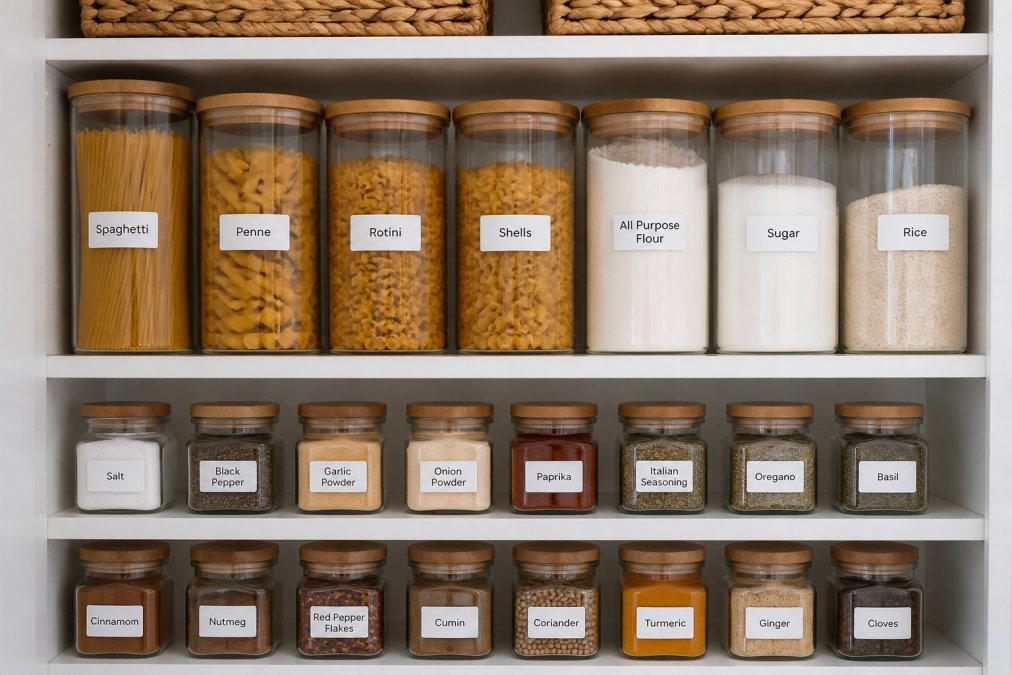
The pantry is where label makers deliver obvious value. Clear labeled containers for dry goods create a visual system that shows at a glance what you have and what you need to buy.
Kitchen organization extends beyond the pantry. Label makers work perfectly on the kitchen storage solutions from PracticalHomeEssentials.com like our expandable lid organizer or the pull-out pots and pans organizer. When you label compartments, lids, baking sheets, cast iron, you eliminate the frustration of searching for the right pot or lid. The Kitchen Bamboo Expandable Cutlery Utensil Drawer Organizer becomes infinitely more functional when each compartment is labeled for its contents.

Under-bed storage with clear windows benefits from labels that identify contents, seasonal clothes, blankets, or shoes, eliminating guessing when you need something specific.
For home offices, labels create visual systems that reduce decision fatigue, especially for neurodivergent households. Labeled drawers for pens, cables, and materials create external structure that supports executive function.
Bathrooms and linen closets benefit from consistent labeling. Label shelves by category, towels, sheets, washcloths, and label containers for medications, first aid supplies, or beauty products. This creates a system that family members can follow without asking questions.
Label Maker vs. Handwritten Labels: Which Wins?
Handwritten labels fade and smudge within months; printed labels last years. Consistent fonts and formats create visual organization that's easier to maintain. A label maker produces dozens of labels in minutes versus hours of handwriting.
Choosing the Best Label Maker for Home Organization
The best label maker depends on your needs and budget. Software and connectivity experience often determine whether you'll use it regularly.
Hardware Considerations: Tape vs. Thermal, Size, and Portability
Under-Bed Storage Drawer with Wheels →
Thermal models are cheaper to operate and produce less plastic waste than tape-based systems. Choose flexible label widths for comprehensive organization. Prioritize portability, battery life (4-6 hours), and intuitive interfaces with physical buttons or small screens.
Digital Integration and App Experience: The Hidden Decision Factor
App quality and Bluetooth stability directly impact usability. Prioritize font variety (50+ options), editable template libraries (50+ templates), and wireless design for phone-based label creation. Cloud synchronization helps multiple household members maintain consistency.
Ease of Setup and Learning Curve
Some label makers require software installation on a computer; others work entirely through a smartphone app. For home use, app-only or app-primary models are typically easier because most people have a smartphone but may not have a dedicated computer nearby. The first-time setup should take fewer than 10 minutes. If the manual is longer than 20 pages or the initial setup requires troubleshooting, that's a red flag.
Look for label makers that offer video tutorials or in-app guidance. A 2-minute video showing how to design and print your first label is worth more than a 50-page PDF manual.
Tape or Paper Quality and Label Durability
Not all adhesive tapes are created equal. Some label maker tapes are water-resistant; others are fully waterproof. If you're labeling kitchen containers or bathroom storage, water resistance is essential. Check the adhesive strength: does the label stay on a smooth plastic container, or does it peel off after a few weeks? Thermal paper quality also varies, some thermal paper fades in sunlight; others are fade-resistant for up to five years.
Specialty Features Worth Evaluating
Some label makers allow you to print on different colored tapes or papers, which adds visual organization options. Others support barcode or QR code printing, useful if you want to track inventory or link labels to digital records. Consider whether these features align with your organizational goals or if they're unnecessary complexity.
For neurodivergent households, particularly those managing ADHD or autism-spectrum executive function challenges, the ability to create highly customizable, visually distinct labels is valuable. A label maker with extensive font, color, and symbol options allows you to create visual systems that work with your brain's processing style rather than against it. Some users benefit from color-coded labels (red for urgent, blue for seasonal, green for pantry items), and a label maker with colored tape options or a color printer supports this approach.
The Bottom Line on Selection
Choose a label maker based on how you'll actually use it. If you want simplicity and portability, a basic thermal model with a small screen and physical buttons is sufficient. If you want flexibility, customization, and the ability to design labels from anywhere in your home, prioritize app connectivity, font variety, and template libraries. Read user reviews specifically about app stability and ease of use, not just hardware specs. The best label maker for your home is the one you'll actually reach for when you need to organize something new.
Pairing Label Makers with Storage Solutions
Label makers reach their full potential when paired with quality storage solutions. The home organization trends report shows that people who combine proper storage containers with clear labeling systems maintain their organization longer than those who use either alone.
The 4-Piece Set: High-Quality Refrigerator Liners - Customizable Cabinet Mats from PracticalHomeEssentials.com works perfectly with a label maker. The customizable liners protect your shelves while labels identify what goes where. This combination creates a system that's both functional and durable.

Under-bed storage becomes infinitely more useful when labeled. The Under-Bed Storage Drawer with Wheels from PracticalHomeEssentials.com already includes a clear window so you can see contents, but adding a label on the front transforms it from "a drawer with stuff in it" to a clearly identified storage unit. Family members know exactly where to find seasonal clothes or extra bedding.
For kitchen organization, pairing a label maker with the Pull Out Pots and Pans Organizer with 8 Adjustable Dividers creates a system where every compartment has a purpose.
Conclusion: Is It Worth It for Your Home?
A label maker worth it as an investment if you're serious about creating an organization system that actually lasts. The upfront cost is minimal compared to the value of maintaining organized spaces and preventing duplicate purchases. For families, the clarity that labels provide eliminates confusion about where items belong. For remote workers, consistent labeling creates a professional environment that supports focus and productivity.
Frequently Asked Questions
Is it worth getting a label maker for home organization?
A label maker is worth it if you have multiple storage areas, frequently reorganize, or struggle with identifying contents of containers. The investment pays off through time savings, most people save 5-10 minutes per day finding items, and reduced food waste in the kitchen. For renters or those with small spaces, the value depends on how often you reorganize and how many labeled containers you maintain.
What are the best label maker organization ideas for different rooms?
Kitchen pantries benefit most from labeling shelves, containers, and expiration dates. Bedrooms work well with labeled under-bed storage drawers (like the Under-Bed Storage Drawer with Wheels available for $29) and closet bins. Home offices see value in labeled desk organizers and filing systems. Bathrooms gain clarity from labeled medicine cabinets and storage. The key is labeling items you regularly access and containers that hold multiple similar products.
Does a label maker save time compared to handwritten labels?
Yes. Label makers produce consistent, readable labels in seconds, while handwriting takes longer and often becomes illegible over time. Thermal printing label makers are fastest for high-volume labeling. Handwritten labels work for occasional use but fade, smudge, and require more effort. If you're organizing 20+ containers or items, a label maker saves 30-45 minutes versus handwriting.
What features matter most when choosing a label maker for home organization?
Battery life, tape width options, and Bluetooth connectivity are most practical for home use. Thermal printing eliminates ink cartridges, reducing long-term costs. Font customization and label durability matter if you're labeling kitchen items or frequently accessed storage. Portable, compact models work best for renters, while stationary models suit permanent home offices. Consider whether you need color labels or if monochrome meets your needs.