

How to Pack for Your First Apartment Move
Table of Contents
- Create a First Apartment Packing Checklist and Timeline
- What to Pack for a First Apartment: Room-by-Room Strategy
- How to Pack an Apartment Quickly Without Sacrificing Quality
- Prepare Your Moving Day Essentials Box
- Packing Supplies and Quantity Guide
- Apartment-Specific Logistics and What Not to Pack
- Unpacking and Organizing Your New Space
- Frequently Asked Questions
Last Updated: October 13, 2026
Create a First Apartment Packing Checklist and Timeline
When you're preparing for your first apartment move, learning how to pack for your first apartment move means the biggest mistake is waiting until the last week to start packing.
The key to understanding how to pack for your first apartment move is breaking it into manageable phases. A four to six-week timeline gives you breathing room and prevents the chaos of last-minute scrambling.
4-6 Weeks Before: Plan and Declutter
Start by taking inventory of what you actually own. Walk through your current space and list everything you plan to take.
Decluttering now saves money and effort later. You won't pay to move items you'll never use. Ask yourself: Will this fit in my new apartment?
Create a simple spreadsheet or use a notepad to track items by room:
- Bedroom items
- Kitchen essentials
- Bathroom supplies
- Living room furniture
- Office or workspace items
Donate or sell items you don't need. Many charities pick up furniture for free, and online marketplaces make it easy to sell gently used goods.
3-4 Weeks Before: Start Gathering Supplies
Begin collecting packing supplies now so you're not scrambling at the last minute. You'll need:
- Moving boxes in various sizes (small, medium, large)
- Packing tape and a tape dispenser
- Bubble wrap or packing paper
- Tissue paper for delicate items
- Permanent markers for labeling
- Plastic bags for soft items
- Newspaper or kraft paper as filler
Don't buy everything at once. Start with a modest supply and add more as you progress. Many grocery stores and liquor stores give away free boxes if you ask.
2 Weeks Before: Begin Packing Non-Essentials
Now it's time to actually pack. Start with items you won't need before moving day. These include:
- Off-season clothing
- Books and decorations
- Extra kitchen gadgets
- Unused bedding or towels
- Hobby supplies
- Items stored in closets or cabinets
Pack gradually. Aim to fill two to three boxes per day rather than attempting everything at once. Label each box clearly with its contents and destination room.
1 Week Before: Pack Gradually and Label Boxes
During the final week, pack items you use occasionally but can live without for a few days. Keep only daily essentials unpacked.
Use a consistent labeling system. Write the room name and a brief description of contents on at least two sides of each box.
Consider color-coding boxes by room. Use different colored markers or stickers for bedroom, kitchen, bathroom, and living room items. This visual system helps movers and you identify where boxes belong immediately.
What to Pack for a First Apartment: Room-by-Room Strategy
Organizing your packing by room keeps you focused and ensures you don't forget essential items. This room-by-room approach works for any apartment size and helps you visualize what belongs where in your new space.
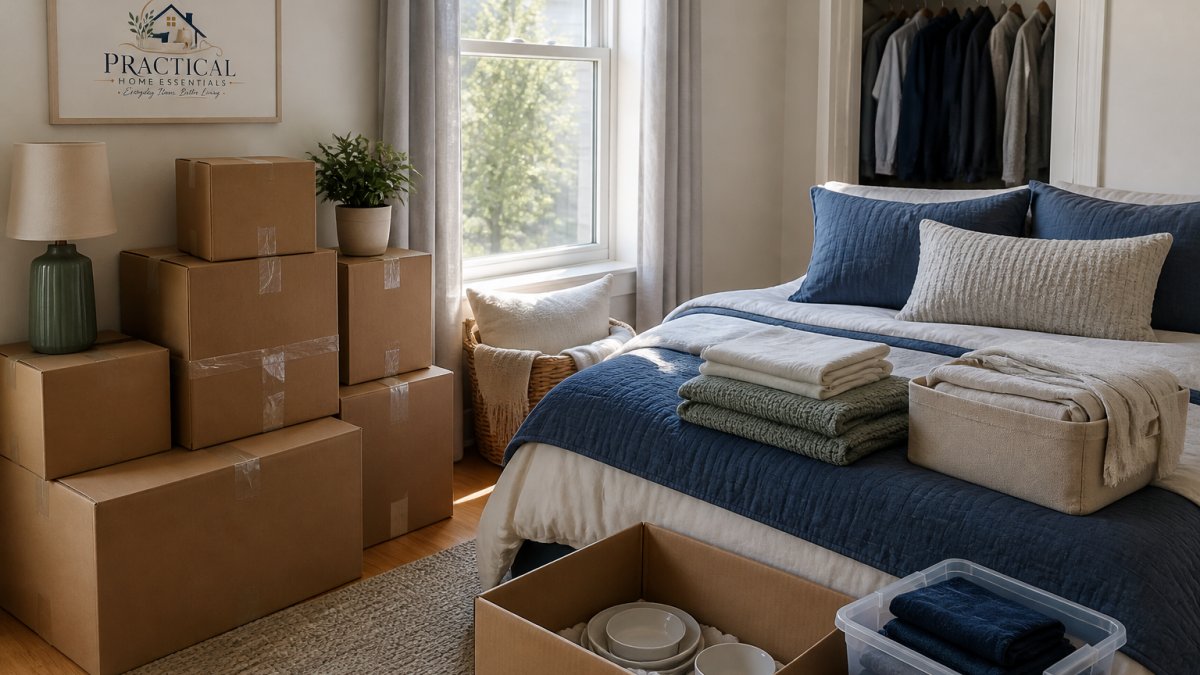
Bedroom Essentials
Your bedroom is your personal retreat. Pack these items first since they're rarely used daily until after you move:
- Bed frame (if you're taking it)
- Mattress and box spring
- Sheets and pillowcases
- Comforter or duvet
- Pillows
- Blankets
- Hangers for your closet
- Dresser or clothing storage
- Nightstands
- Lamps and light bulbs
- Curtains or blinds
Keep one set of clean sheets and a pillow accessible in your essentials box so you can make your bed on moving night.
Bathroom Supplies and Toiletries
Bathrooms are often overlooked in packing lists. Gather these items in one place:
- Towels and washcloths
- Bath mat
- Shower curtain and rings
- Toilet brush and plunger
- Cleaning supplies
- Toilet paper and paper towels
- Medications and first aid kit
- Toothbrush and toothpaste
- Deodorant
- Shampoo and conditioner
- Soap and body wash
- Hairbrush and styling tools
- Razors and shaving cream
- Feminine hygiene products
- Skincare products
Pack toiletries in a waterproof container to prevent spills. Keep daily items separate so you can access them immediately.
Kitchen Items and Food Storage
The kitchen requires careful planning since you'll need certain items right away. Pack these strategically:
- Pots, pans, and baking sheets
- Dishes, bowls, and mugs
- Silverware and cooking utensils
- Knives and cutting board
- Can opener and other gadgets
- Food storage containers
- Plastic bags and foil
- Dish soap and sponges
- Towels and pot holders
- Small appliances
- Glasses and water bottles
Keep one plate, bowl, mug, fork, spoon, and knife in your essentials box so you can eat immediately after arrival.
Living Room and General Household
These items create comfort and functionality in your main living space:
- Furniture (couch, chairs, coffee table)
- Lamps and light bulbs
- Curtains or blinds
- Throw pillows and blankets
- Area rugs
- Wall decorations
- Books and shelving
- Entertainment items
- Extension cords and power strips
- Cleaning supplies
Pack decorative items last since they're the least essential. You can always hang pictures after unpacking the basics.
How to Pack an Apartment Quickly Without Sacrificing Quality
Speed matters when you're moving, but careless packing creates problems. Balance efficiency with care to protect your belongings and make unpacking easier.
Pack Gradually to Avoid Last-Minute Stress
The worst packing happens on the day before you move. Avoid this by packing a little each day over several weeks. This method reduces stress and gives you time to think through what each box contains.
Set a daily goal. Pack one room or one category per day. Take breaks to avoid burnout. This steady approach is far more effective than marathon packing sessions.
Keep Boxes Light and Manageable
A box that's too heavy is dangerous to move and easy to damage. Aim for boxes you can comfortably carry with one hand, though two-handed carrying is ideal.
Follow this rule: fill heavy items in small boxes and light items in large boxes. Books, dishes, and canned goods belong in small containers.
Mark heavy boxes clearly so movers know to use proper lifting technique. This prevents injury and protects your belongings.
Use Protective Materials for Fragile Items
Dishes, glasses, and decorative items need protection. Wrap each piece individually in bubble wrap or packing paper.
Place heavier items on the bottom of boxes and lighter items on top. Fill gaps with crumpled paper or foam peanuts so nothing shifts during transport.
For valuable or sentimental items, consider transporting them yourself rather than putting them on the moving truck. This gives you peace of mind and ensures they arrive safely.
Prepare Your Moving Day Essentials Box
Your essentials box is the most important box you pack. This box contains items you'll need immediately when you arrive at your new apartment, before you have time to unpack everything else.
First-Night Essentials You'll Need Immediately
Pack one box specifically for your first night. Include:
- Toiletries (toothbrush, toothpaste, deodorant, medications)
- Change of clothes for tomorrow
- Pajamas
- Phone charger
- One set of clean sheets
- Pillow and blanket
- Towel and washcloth
- Toilet paper and paper towels
- Dish soap and sponge
- One plate, bowl, cup, fork, spoon, and knife
- Trash bags
- Basic cleaning supplies
- Flashlight or lamp
- Snacks and water
Keep this box with you during the move rather than loading it on the truck. You want immediate access when you arrive.
Important Documents and Keys
Protect important papers by carrying them with you. Never put these on the moving truck:
- Lease or rental agreement
- ID and Social Security card
- Bank statements and financial records
- Insurance documents
- Medical records
- Passport
- Birth certificate
- Apartment keys
- Car keys
- Any other irreplaceable documents
Store these in a small bag or folder you keep with you at all times during the move.
Packing Supplies and Quantity Guide
Estimating how many boxes and supplies you need prevents waste and ensures you have enough. Most one-bedroom apartments require between 30 and 50 boxes, depending on how much you own.
Here's a general supply estimate for a typical first apartment:
| Supply Item | Quantity | Notes |
|---|---|---|
| Small boxes | 10-15 | For books, dishes, heavy items |
| Medium boxes | 15-20 | For clothing, linens, general items |
| Large boxes | 10-15 | For pillows, blankets, light items |
| Packing tape | 4-6 rolls | One roll per 5-10 boxes |
| Bubble wrap | 1-2 rolls | For fragile items |
| Packing paper | 1 ream | Alternatively use newspaper |
| Permanent markers | 2-3 | For labeling boxes |
| Plastic bags | 1 box | For soft items and protection |
Start with this estimate and adjust based on how much you actually own. It's better to have extra supplies than to run out mid-project.
Apartment-Specific Logistics and What Not to Pack
Different apartments present different challenges. Understanding your specific situation helps you pack more effectively and avoid problems on moving day.
Navigate Building Rules, Elevators, and Stairs
Before moving day, check your apartment building's policies. Many buildings have specific rules about moving times, elevator reservations, and parking for moving trucks.
Call your building management or landlord to ask:
- What are the moving day hours?
- Do I need to reserve the elevator?
- Where can the moving truck park?
- Are there any restricted items?
- What's the process for protecting hallways and common areas?
- Do I need to leave a deposit for elevator protection?
For apartments on upper floors, plan your packing accordingly. Lightweight boxes are essential when you're carrying items up stairs or waiting for elevator availability. Heavy boxes become impractical quickly.
If your building has narrow hallways or tight corners, measure your furniture before moving day.
What to Discard, Donate, or Leave Behind
Not everything deserves a spot in your new apartment. Be selective about what you move. Transporting items costs money and uses valuable space.
Leave behind or donate:
- Broken furniture or appliances
- Worn-out clothing you never wear
- Duplicate kitchen gadgets
- Books you've already read and won't read again
- Expired medications or cosmetics
- Broken electronics
- Furniture that doesn't match your new style
- Items taking up space without adding value
- Anything you haven't used in over a year
This selective approach reduces moving costs and gives you a fresh start in your new space. You can always replace items later if you truly miss them.
Unpacking and Organizing Your New Space
Unpacking is just as important as packing.
Start by opening your essentials box first. Set up your bed, bathroom, and kitchen basics immediately.
Unpack room by room rather than opening every box at once.
Break down boxes as you empty them. Flatten cardboard and stack it for recycling.
Take your time with decorating.
Your first apartment move marks an exciting new chapter.
PracticalHomeEssentials.com offers storage solutions to make your move easier.
Frequently Asked Questions
How far in advance should I start packing for my first apartment move?
Start packing 4-6 weeks before your move. Begin by decluttering and deciding what to keep, then gather supplies 3-4 weeks out. Pack non-essential items gradually over the next 2-3 weeks, leaving only daily-use items for the final week. This timeline prevents last-minute stress and allows you to pack thoughtfully rather than rushing.
What should I keep in a moving day essentials box for my first apartment?
Pack a first-night box with toiletries, medications, phone chargers, a change of clothes, bedding, towels, toilet paper, basic kitchen items, important documents, and your apartment keys. Keep this box easily accessible and label it clearly so it's the first thing you unpack. Include medications, eyeglasses, and any items you'll need before unpacking other boxes.
How many boxes do I need for a first apartment move?
Most first apartments require 15-25 boxes, depending on how much you're bringing. A studio or one-bedroom typically needs fewer boxes than a two-bedroom. Estimate 3-5 boxes per room, accounting for closets and storage. Start with fewer boxes and adjust as needed; it's better to have extras than to run short during packing.
What should I avoid packing when moving to a new apartment?
Don't pack perishable food, hazardous materials, or items prohibited by moving companies (propane, paint, chemicals). Leave behind bulky furniture that won't fit your new space, broken items you don't plan to repair, and clothes you haven't worn in a year. Avoid overpacking boxes, keep them under 50 pounds for safety and ease of handling during the move.