

How to Declutter a Small Kitchen Fast
Table of Contents
- Why Small Kitchens Need a Fast Decluttering Plan
- The One Decision Rule: Keep, Donate, Recycle, or Discard
- How to Declutter a Kitchen in 15 Minutes
- Organize Items by Category and Kitchen Zone
- Small Kitchen Decluttering Checklist
- How to Keep Kitchen Counters Clutter-Free
- What to Do With Items You're Removing
- Maintain Your Decluttered Kitchen
- Frequently Asked Questions
Last Updated: October 12, 2026
Why Small Kitchens Need a Fast Decluttering Plan
A cluttered small kitchen wastes precious space and makes cooking frustrating. Learning how to declutter a small kitchen fast helps you reclaim functionality and create room to actually work. The difference between a packed kitchen and an organized one often comes down to removing items you don't use and arranging what stays strategically.
Small kitchens demand ruthless decisions. Every inch counts. A typical small kitchen might have just 30-40 square feet of workspace. Add clutter, and that shrinks further. The good news: you don't need hours to fix it. Most people can declutter a small kitchen fast in one focused session.
PracticalHomeEssentials.com offers a curated selection of quality goods designed to elevate every room in your home, from cozy bedding and stylish decor to functional kitchenware and organized storage solutions. The fastest way to declutter isn't buying more organizers. It's removing what doesn't belong, then arranging what stays so it's easy to access and maintain.
The One Decision Rule: Keep, Donate, Recycle, or Discard
When you're decluttering a small kitchen fast, every item needs a decision. Use this simple four-category rule:
Keep items you use at least once a month. These are your everyday essentials: cooking utensils, plates, glasses, pots, and pans you actually cook with.
Donate items in good condition you haven't used in a year. Duplicate gadgets, rarely-used appliances, and extra dishes belong here. Someone else will use them.
Recycle broken items, bent utensils, and anything damaged beyond repair. A bent spoon or chipped mug takes up space and creates visual clutter.
Discard anything unsafe or unusable. Expired food, cracked containers, and items with permanent stains go in the trash.
This framework removes the emotional weight from decisions. You're not asking "Should I keep this?" You're asking "Did I use this in the last year?" The answer is usually clear.
How to Declutter a Kitchen in 15 Minutes
Fifteen minutes is enough to reset one high-impact zone, not the whole kitchen. The trick is to treat the timer as a hard stop and work in a single pass instead of pulling everything out at once. Here is the exact sequence.
Before you start (30 seconds): Set a visible timer. Grab three bags or bins: one for donate, one for trash, one for "belongs somewhere else." Put a laundry basket on the floor for anything that leaves the kitchen.
Minutes 1-3: Pick one zone and empty only its surface. Choose the counter next to your stove, the top of your fridge, or the front half of one drawer. Pull only what sits on that surface. Resist the urge to open every cabinet.
Minutes 4-9: Sort with a two-second rule. For each item, ask one question: "Did I use this in the last 30 days?" If yes, it goes back. If no, it goes into donate, trash, or the laundry basket.
Minutes 10-13: Return the keepers. Put back only what you touched and decided to keep.
Minutes 14-15: Close the loop. Carry the trash bag to the bin, put the donate bag in your car trunk (not by the door, by the door means it stays there for a month), and return the "belongs somewhere else" items to their rooms.
When 15 minutes is not enough. Most small kitchens need two to four 15-minute sessions, not one. Run one session per zone: counters, then upper cabinets, then lower cabinets, then pantry. Schedule them on separate days so you do not burn out.
Organize Items by Category and Kitchen Zone
After you declutter a small kitchen fast, organization keeps it that way. Group items by how you use them, not by type alone.
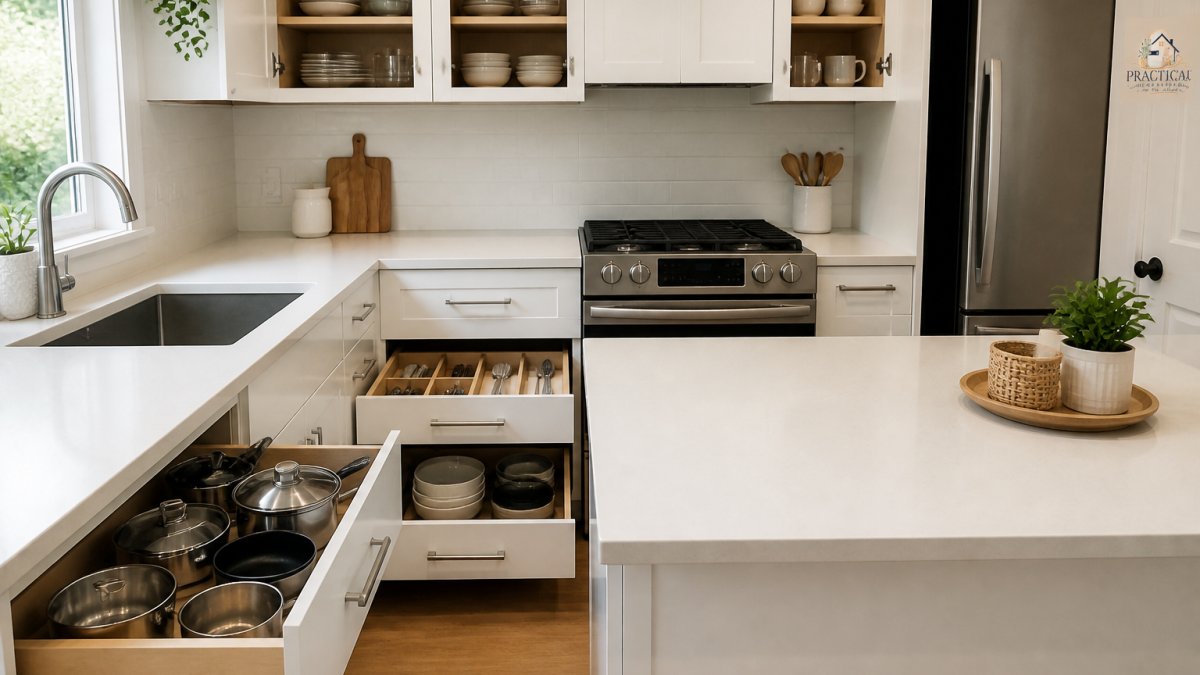
Cooking zone (around your stove): Keep pots, pans, and cooking utensils here. A pull-out organizer for pots and pans saves space and makes items easy to grab. The Pull Out Pots and Pans Organizer with 8 Adjustable Dividers from PracticalHomeEssentials.com slides into a cabinet and keeps cookware visible and accessible without cluttering your counter.

Prep zone (your main counter or cutting area): Store cutting boards, knives, and prep tools within arm's reach. A bamboo utensil organizer works well for drawers. The Kitchen Bamboo Expandable Cutlery Utensil Drawer Organizer expands to fit your drawer and keeps utensils separated and easy to find.

Dishwashing zone (your sink area): Keep dish soap, sponges, and drying racks here. A roll-up dish rack over your sink saves counter space. The Surpahs Over the Sink Multipurpose Roll-Up Dish Drying Rack folds away when not in use, keeping your sink area clear.

Storage zone (cabinets and pantry): Arrange items by frequency. Daily items at eye level. Weekly items in accessible cabinets. Rarely-used items in back corners or high shelves.
The principle is simple: store items near where you use them. Your coffee maker lives near your mugs. Your cooking oils live near your stove. This reduces walking and searching, making your small kitchen feel larger and more functional.
Small Kitchen Decluttering Checklist
Use this checklist to stay focused as you learn how to declutter a small kitchen fast:
- Remove everything from countertops
- Take out one cabinet or drawer at a time
- Sort items into Keep, Donate, Recycle, Discard piles
- Remove duplicates (extra utensils, gadgets, plates)
- Throw away expired food and broken items
- Wipe down shelves and drawers before restocking
- Return only frequently-used items to prime locations
- Group similar items together
- Use drawer dividers or small containers for utensils
- Label shelves if you have multiple people using the kitchen
- Keep a donation box ready for items leaving your home
- Set a timer to stay focused on your 15-minute goal
Print this checklist or save it on your phone. Having a visual guide keeps you from second-guessing decisions and helps you move quickly through the process.
Pull Out Pots and Pans Organizer with 8 Adjustable Dividers →
How to Keep Kitchen Counters Clutter-Free
After you declutter a small kitchen fast, the real challenge is maintaining it. A clutter-free counter makes your kitchen feel spacious and functional.
The rule of three: Keep only three things on your counter, items you use daily. For most people, that's a coffee maker, utensil holder, and cutting board. Everything else goes in a cabinet.
Create a home for everything. Every item that lives on your counter needs a designated spot. Your coffee maker has its corner. Your utensil holder has its spot. This makes it easy to put things away and keeps the counter organized.
Use vertical space. Wall-mounted shelves, magnetic strips for knives, and hooks for utensils keep items accessible without taking up counter space. A stainless steel pot rack above your stove or island provides storage and visual interest while keeping pots out of cabinets.
Clean as you cook. Put items away immediately after using them. Don't let dishes, utensils, or ingredients pile up. A five-second action now prevents a 15-minute cleanup later.
Keep a catch-all drawer. One drawer holds miscellaneous items that don't have a permanent home. Rubber bands, twist ties, takeout menus. This prevents these items from spreading across your counter.
The goal isn't perfection. It's functionality. A counter with only your daily essentials feels open and inviting, making your small kitchen feel bigger.
What to Do With Items You're Removing
When you declutter a small kitchen fast, you'll have piles of items leaving your home. Handle them responsibly.
Donation items go to local charities, thrift stores, or community centers. Most accept kitchen items in good condition. Call ahead to confirm what they take. Many offer free pickup for larger donations.
Recycling items include broken glass, damaged metal, and old appliances. Check your local recycling program's guidelines. Some items need special handling. An old toaster or microwave might have a local e-waste recycling program.
Discard items go in your regular trash or a dumpster if you have a large volume. Broken ceramics, stained utensils, and expired food all go here.
Sell valuable items on online marketplaces if you have higher-end appliances or specialty cookware. A stand mixer or food processor in good condition might sell quickly.
The key is removing items from your kitchen within a week. Leaving donation piles sitting around defeats the purpose of decluttering. Set a specific day to drop off donations or schedule a pickup.
Maintain Your Decluttered Kitchen
Most small kitchens re-clutter within 60 to 90 days because maintenance is treated as a chore instead of a habit tied to something you already do. The fix is to attach each maintenance action to an existing trigger, so it happens without a reminder.
The five-minute Sunday reset. Pick a fixed time, after dinner, before the week starts, and set a five-minute timer. Walk the kitchen with one bag and remove anything that does not belong: mail, receipts, chargers, kids' artwork, empty jars. Do not reorganize. Just remove.
The "while the coffee brews" rule. Your coffee maker takes three to four minutes. Use that window to unload the dishwasher or wipe the main prep counter.
The one-in, one-out rule, applied at the point of purchase. When you bring a new mug, pan, or gadget into the kitchen, remove one item of the same category before the new one goes in a cabinet.
A permanent donation bag. Keep a paper grocery bag or small bin in the bottom of a cabinet or beside the trash. Every time you notice something you have not used, a duplicate spatula, a chipped bowl, a gadget that failed, drop it in.
The 30-day check on one shelf. Once a month, pick a single shelf or drawer, not the whole kitchen, and pull everything out. If an item has not moved since the last check, it goes in the donation bag.
What to do when you fall off. You will. A busy week, a holiday, a move, the kitchen will drift. The recovery is not a full re-declutter. Run one 15-minute session on the worst zone, then resume the Sunday reset.
Frequently Asked Questions
How can I declutter my small kitchen quickly without organizing products?
Start with a single zone, your most-used cabinet or drawer, and sort items into four piles: keep, donate, recycle, and discard. Set a 15-minute timer per zone. You don't need storage organizers to declutter; focus on removing duplicates and unused items first. Once you know what stays, affordable dividers like the Kitchen Bamboo Expandable Cutlery Organizer ($44) can maximize space without breaking your budget.
What kitchen items should I get rid of when decluttering?
Remove duplicate utensils, chipped dishes, expired spices, single-use gadgets you haven't touched in six months, and cookware that doesn't fit your cooking style. Keep only the everyday essentials, one set of measuring spoons, one spatula, one wooden spoon. If you own five can openers, donate four. Unused items waste valuable cabinet and drawer space in a tiny kitchen.
How do I keep kitchen counters clutter-free after decluttering?
Store only items you use daily on the counter: coffee maker, toaster, or knife block. Everything else goes in cabinets or drawers. Designate a home for each counter item, a specific spot where it always returns. Use vertical space with wall-mounted shelves or hooks for frequently used pots and pans. The Stainless Steel Oval Pot Rack ($179.75) keeps cookware accessible and off your limited counter space.
Can I declutter a small kitchen without buying lots of organizers?
Yes. Start by purging items you don't use, then group what remains by category. Use existing containers, jars, or boxes to corral small items like spices or utensils. Only invest in organizers after you've decluttered and know exactly what you're storing. A single divider organizer like the Pull Out Pots and Pans Organizer ($33) can handle your entire cookware collection without needing multiple products.