

How to Choose Durable Pet-Friendly Storage
Table of Contents
- Assess Your Pet's Impact on Storage
- Select Durable Storage Materials for Pets
- Prioritize Safety Features and Pet-Proof Design
- Pet-Proof Storage Ideas for Different Spaces
- How to Organize Pet Supplies Safely and Accessibly
- Evaluate Durability and Maintenance Requirements
- Recommended Pet-Friendly Storage Solutions
- Frequently Asked Questions
Last Updated: September 19, 2026
Assess Your Pet's Impact on Storage
Pet ownership transforms how you think about storage. Before shopping for solutions, understand what your pets actually do to your home. This assessment determines which materials, designs, and safety features you'll need.
Identify damage patterns in your home
Walk through your space and observe where damage occurs. Cats scratch furniture edges and climb shelves. Dogs knock over containers and chew corners. Small pets like rabbits or guinea pigs gnaw on wood and fabric. Each species leaves distinct wear patterns.
Look for these damage markers:
- Scratched wood surfaces and frame edges
- Torn or stained fabric
- Toppled storage units
- Chewed corners or handles
- Hair accumulation in crevices
Document which materials show the most wear. If your cat has shredded a fabric bin, synthetic materials work better than canvas. If your dog has knocked over lightweight shelving, you need a durable frame with anti-toppling devices.
Measure weight-bearing needs for large pets
Large dogs and multiple pets create load demands most standard storage cannot handle. Measure your pet's weight and consider how they interact with furniture.
A 70-pound dog jumping onto a storage bench or leaning against shelving adds significant stress. Storage must support not just the items inside but the pet's weight pressing against it. Check weight capacity ratings carefully. Standard shelving rated for 50 pounds will fail under a large dog's impact.
Consider these scenarios:
- Does your pet jump on or lean against storage?
- Will storage hold pet supplies (food bags, litter, toys)?
- Do multiple pets use the same space?
Weight capacity matters more than aesthetics. A sturdy unit rated for 165 pounds or higher works better for households with large pets than a lighter option.
Select Durable Storage Materials for Pets
Material choice determines how long your storage lasts. Pet-friendly storage requires materials that resist damage, clean easily, and withstand constant wear.
Tightly woven synthetic fibers and non-porous surfaces
Synthetic materials outperform natural fabrics in pet homes. Look for tightly woven fabrics with high fiber density. These resist snagging from claws and absorb less odor and moisture.
Non-porous surfaces matter for cleaning. Smooth, waterproof finishes prevent pet hair, dander, and liquid from soaking in. Wipe-clean surfaces save hours of maintenance.
Best synthetic options include:
- Polyester blends with waterproof coatings
- High-density polypropylene
- Treated canvas with PE moisture barriers
- Microfiber with stain resistance
The American Society for Testing and Materials establishes durability standards for textiles. Look for materials tested to withstand repeated friction and moisture exposure. Higher rub counts indicate longer-lasting fabrics.
Engineered wood with waterproof coatings
Engineered wood offers better pet resistance than solid wood. It resists moisture damage from spilled water bowls and accident cleanup. Waterproof coatings seal the surface against stains and odor penetration.
Solid wood absorbs liquids and harbors bacteria. Engineered wood with waterproof finishes prevents these problems. The smooth surface also makes cleaning faster.
Key features to verify:
- Waterproof surface coating (not just water-resistant)
- Sealed seams and joints
- Non-toxic finish safe for pets
- Easy-to-clean edges and corners
Metal frames and reinforced hardware
Metal frames provide the structural strength pet homes demand. Steel pipes and metal brackets resist bending under weight and impact. They don't splinter or crack like wood.
Metal also resists pet damage. Claws don't scratch powder-coated steel effectively. Metal doesn't absorb odors or moisture.
Look for these metal features:
- Powder-coated steel (not bare metal that rusts)
- Reinforced corner joints
- Sturdy metal pipes, not thin tubing
- Anti-toppling brackets
Prioritize Safety Features and Pet-Proof Design
Safety prevents injuries and escapes. Pet-proof storage keeps dangerous items away from curious animals while protecting the furniture itself.

Double redundant zippers and secure closures
Zippers fail. Latches break. Pet-proof storage needs backup closure systems. Double redundant zippers mean if one fails, a second still secures the contents.
Closure options include:
- Dual zippers on opposite sides
- Zipper plus magnetic latch
- Latch plus velcro backup
- Locking cabinet doors for toxic storage
Rounded corners and anti-toppling devices
Sharp corners injure pets during play or accidents. Rounded edges prevent cuts and eye injuries. Anti-toppling devices keep tall storage from falling on curious animals.
Safety features that matter:
4-Tier Kids Bookshelf and Toy Storage →
- Rounded corners on all edges
- Anti-toppling brackets included or compatible
- Stable base design that resists tipping
- Smooth surfaces without protruding hardware
Non-toxic finishes and pet-safe materials
Pets chew, lick, and rub against storage daily. Finishes must be non-toxic if ingested. Pet-safe materials don't release harmful chemicals into the air.
Avoid storage with:
- Lead-based paint
- Formaldehyde-heavy particleboard
- Chemical stains or sealers
- Phthalate-containing plastics
Pet-Proof Storage Ideas for Different Spaces
Different rooms need different storage approaches. Your living room demands different solutions than a laundry room or bedroom.
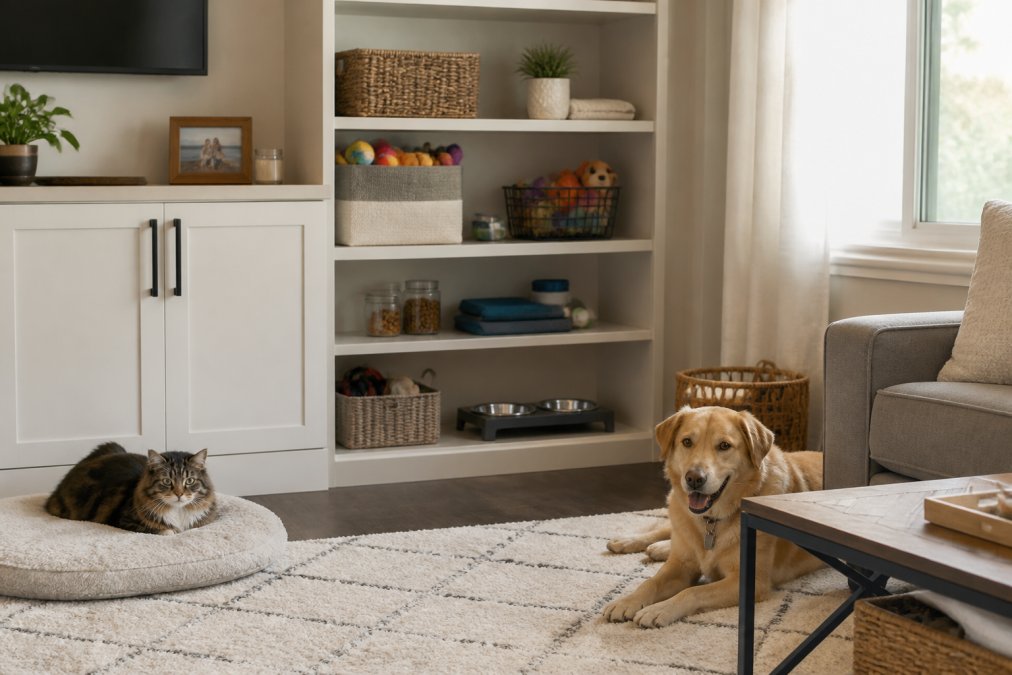
Closed storage versus open shelving trade-offs
Closed storage hides pet supplies and prevents access to toxic items. Open shelving displays items but requires constant organization to look neat. Pet homes benefit from a mix.
Closed storage advantages:
- Keeps toxic items away from pets
- Reduces visible clutter
- Protects contents from pet hair and dander
- Creates a cleaner aesthetic
Open shelving advantages:
- Easy access to frequently used items
- Shows off attractive pet supplies
- Allows better air circulation
- Takes less floor space
Modular design for easy repair and replacement
Pets destroy things. Modular storage lets you replace damaged sections without replacing the entire unit. If your dog chews one bin, swap it out instead of buying new shelving.
Modular benefits include:
- Individual bins and shelves replaceable
- Customize layout as needs change
- Easier to clean individual components
- Less waste when damage occurs
How to Organize Pet Supplies Safely and Accessibly
Organization prevents accidents and makes daily pet care easier. Strategic placement keeps dangerous items away from curious pets while keeping essentials within reach.
Use removable, machine-washable bins and covers
Pet supplies get dirty. Hair, food dust, and odor accumulate in storage. Machine-washable bins let you clean without moving the entire shelving unit.
Benefits of removable bins:
- Machine wash removes pet hair and odor completely
- Easy to move for pet access during feeding
- Quick to replace when soiled
- Prevents odor buildup in storage frame
Store toxic items out of reach with lockable cabinets
Medications, cleaning supplies, and certain foods poison pets (Poisonous Household Products). Lockable cabinets keep these items secure. A curious pet cannot open a latched door the way it might knock over an open bin.
Items requiring locked storage:
- Medications and supplements
- Cleaning products
- Pesticides and fertilizers
- Chocolate and xylitol-containing foods
- Essential oils and human supplements
Evaluate Durability and Maintenance Requirements
Durability determines how long storage lasts before replacement. Maintenance requirements affect your daily routine and long-term costs.
Check rub counts and scratch-resistant finishes
Scratch-resistant finishes protect wood and metal surfaces. These coatings withstand claw marks and impact without visible damage. They also make cleaning easier since scratches don't trap dirt.
Durability standards to check:
- Scratch-resistant topcoat on wood
- Powder-coated metal (more durable than paint)
- Sealed seams that resist separation
Plan for cleaning protocols and odor resistance
Pet odor builds up in storage. Regular cleaning prevents smells from becoming permanent. Plan storage that supports your cleaning routine.
Cleaning-friendly features include:
- Smooth surfaces (no crevices for hair)
- Machine-washable removable parts
- Non-porous materials that don't absorb odor
- Sealed joints that don't trap debris
Recommended Pet-Friendly Storage Solutions
PracticalHomeEssentials.com offers several options designed for pet homes. Each combines durability with safety features pets require.
| Storage Type | Best For | Key Feature | Price |
|---|---|---|---|
| 4-Tier Kids Bookshelf | Multiple pets, toys, supplies | 8 removable bins, anti-toppling | $183.99 |
| Murphy/Jensen Bins | Daily pet supplies, laundry | Machine-washable, waterproof | $26.99 |
| Industrial Metal Sideboard | Large pets, heavy items | 165 lb capacity, metal frame | $134.53 |
Frequently Asked Questions
What is the best material for pet-friendly storage furniture?
Engineered wood with waterproof coatings, tightly woven synthetic fibers, and metal frames offer the best durability for pet-friendly storage. Non-porous surfaces resist moisture, odor, and staining from accidents. Metal pipes and reinforced hardware withstand weight from large pets and daily wear. Avoid untreated wood, wicker, and soft fabrics that absorb moisture and harbor bacteria.
How do I keep pets out of my storage bins and prevent damage?
Use closed storage with double redundant zippers, secure latches, and heavy-duty hinges that pets cannot force open. Lockable cabinets protect toxic items like cleaning supplies and medications. Anti-toppling devices prevent large dogs from knocking over tall units. Store bins in elevated or enclosed spaces when possible. Machine-washable covers contain dander and odor while remaining accessible for cleaning.
What weight capacity do I need for pet-friendly storage?
For large dogs, choose storage with a weight capacity of at least 165 lbs to accommodate jumping, leaning, and resting on furniture. The Modern Industrial Sideboard from PracticalHomeEssentials.com supports 165 lbs across shelves and tabletop.
Are canvas storage bins with waterproof coatings safe for pets?
Yes, canvas bins with waterproof PE coating are pet-safe when they have secure closures and no small parts pets can chew. The Murphy and Jensen laundry bins from PracticalHomeEssentials.com feature cotton canvas with waterproof coating, leather handles, and durable construction. Machine-washable exteriors make cleaning easy after pet accidents. Always inspect zippers and seams regularly for wear.