

How Long to Organize a Small Closet: A Realistic Timeline
Table of Contents
- How Long Does It Take to Organize a Small Closet?
-
How to Organize a Small Closet: Step-by-Step Process
- Step 1: Take Everything Out (20-30 minutes)
- Step 2: Declutter and Sort Into Keep, Donate, and Discard Piles (45-60 minutes)
- Step 3: Group Clothes and Accessories by Category (15-20 minutes)
- Step 4: Clean the Closet Space (10-15 minutes)
- Step 5: Assess Storage Needs and Install Organizers (30-45 minutes)
- Step 6: Return Items and Arrange by Category (20-30 minutes)
- Closet Decluttering Checklist: What to Keep and Remove
- Small Closet Storage Solutions to Maximize Space
- How to Organize a Tiny Closet With Lots of Clothes
- What to Do When the Project Takes More Than One Session
- Maintaining Your Organized Closet: Ongoing Time Commitment
- Frequently Asked Questions
Last Updated: October 14, 2026
How Long Does It Take to Organize a Small Closet?
To organize small closet spaces takes between two to four hours for most people. The actual time depends on how cluttered your space is, how many clothes you own, and what storage solutions you already have.
The good news: you don't need a full weekend. A focused afternoon works perfectly.
Time Estimates by Closet Size and Clutter Level
A tiny closet with minimal clutter takes about two hours. A small bedroom closet that's moderately full takes three to four hours. If your closet is packed with items you haven't worn in years, expect closer to five hours.
Here's the breakdown:
| Closet Type | Clutter Level | Time Needed |
|---|---|---|
| Tiny closet | Light | 1.5-2 hours |
| Small closet | Moderate | 2.5-3.5 hours |
| Small closet | Heavy | 4-5 hours |
| Walk-in closet | Light | 3-4 hours |
| Walk-in closet | Heavy | 5-7 hours |
The key is being realistic about your space. Don't rush the process just to finish faster.
Factors That Speed Up or Slow Down the Process
Several things change how long organizing takes. Having the right storage containers on hand speeds things up considerably. If you need to buy slim hangers, fabric bins, and hanging organizers first, add another 30-45 minutes.
Your decision-making speed matters too. People who quickly decide what to keep move faster. Those who second-guess every item take longer.
The condition of your closet affects timing. A closet that needs cleaning before organizing takes extra time. A space with broken shelves or a damaged closet rod slows you down.
How to Organize a Small Closet: Step-by-Step Process
This is how to organize small closet spaces efficiently. Follow these steps in order, and you'll finish.
Step 1: Take Everything Out (20-30 minutes)
Remove every single item from your closet. Yes, everything. This sounds drastic, but it's the fastest way to see what you actually own.
Pull out all clothes, shoes, accessories, and anything else stored there. Lay items on your bed or across a clean floor space. This step takes 20-30 minutes for a small closet.
Why do this? You can't organize what you can't see. Taking everything out forces you to handle each item and prevents things from getting lost in the back.
Step 2: Declutter and Sort Into Keep, Donate, and Discard Piles (45-60 minutes)
This is where the real time goes. Go through each item one by one.
Ask yourself: Do I wear this? Does it fit? Is it in good condition? If the answer is no to any of these, it goes.
Create three piles:
- Keep: Items you wear regularly and love
- Donate: Clothes in good condition you no longer wear
- Discard: Damaged items beyond repair
Be honest. If you haven't worn something in a year, you probably won't. Clothes you no longer wear take up space you need for items you actually use.
Step 3: Group Clothes and Accessories by Category (15-20 minutes)
Sort your keep pile into categories. Group all shirts together, all pants together, all dresses together, and so on.
Within each category, you can organize further:
- By color
- By sleeve length
- By weight (winter vs. summer)
This organization makes getting dressed faster and helps you see what you actually own.
Step 4: Clean the Closet Space (10-15 minutes)
Now that everything is out, clean the closet thoroughly. Wipe down shelves and the closet rod. Vacuum or sweep the floor.
A clean space makes organizing feel fresh and new. You'll also spot any damage that needs fixing before you put items back.
Step 5: Assess Storage Needs and Install Organizers (30-45 minutes)
Look at your items and your space. Do you need more shelf space? Could you use hanging organizers? Would fabric bins help?
Install organizers now, before you return items. This might mean:
- Adding shelves or racks
- Installing hanging organizers on the rod
- Placing bins or baskets on the floor
This step takes longer if you're installing new shelves. Simple organizers like hanging racks take just minutes.
Step 6: Return Items and Arrange by Category (20-30 minutes)
Put items back in your organized closet. Place categories in logical spots:
- Frequently worn items at eye level
- Seasonal clothes on higher shelves
- Shoes and accessories in bins or on racks
Arrange hangers so they face the same direction. This small detail makes your closet look intentional and organized.
Closet Decluttering Checklist: What to Keep and Remove
Use this checklist to decide what stays and what goes:
- Do I wear this item regularly?
- Does it fit my current body and style?
- Is it in good condition with no stains or damage?
- Do I feel confident and comfortable wearing it?
- Have I worn it in the last year?
- Does it match other items in my closet?
- Would I buy this item again today?
- Does it serve a specific purpose I actually need?
If you answer no to more than two questions, the item should go. Trust your instincts. Your closet should contain only clothes you love wearing.
Small Closet Storage Solutions to Maximize Space
Every organizing article tells you to buy slim hangers and fabric bins. That advice is fine, but it does not answer the question you actually have: which of these changes save you time during the project, and which ones just look nice afterward? Here is the storage advice ranked by how much time it saves on organizing day.
Time-Saving Storage Changes (Do These First)
Slim hangers. Switching from thick plastic or wooden hangers to slim velvet or slim wooden hangers can roughly double your usable rod space.
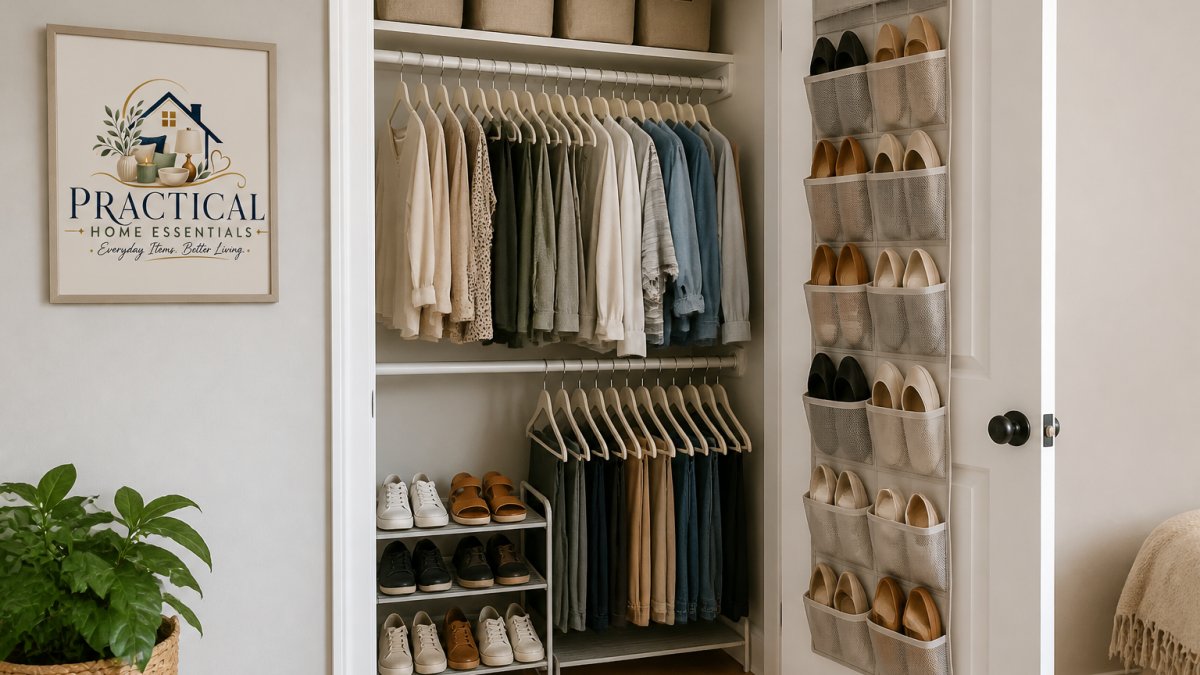
Over-the-door shoe organizer. This moves shoes off the floor and out of bins, which cuts the time you spend digging for a matching pair. Installation is under five minutes, no tools required for most models.
Storage That Looks Good but Costs You Time
Clear plastic bins with lids. They stack neatly, but if you have to unstack three bins to reach the one you want, you have traded floor space for daily friction.
Deep woven baskets. Attractive, but items disappear into them. If you cannot see what is inside without dumping the basket, you will re-sort it every few weeks.
Decorative boxes on high shelves. Fine for keepsakes, bad for anything you wear. High shelves are for items you touch twice a year, not weekly.
Matching Your Storage to Your Closet Layout
A reach-in closet and a small walk-in need different strategies:
- Reach-in with a single rod and shelf: prioritize slim hangers, a double-hang rod, and one over-the-door organizer. Skip floor bins if the floor is your only walking space.
- Small walk-in: use the back wall for shelves or a slim dresser, keep the rod for hanging only, and put shoes on a tiered rack rather than the floor.
- Rental or no-drill situation: tension rods, adhesive hooks, and over-the-door racks give you most of the benefit without permanent changes. Expect to spend 10-15 extra minutes positioning them correctly.
What to Buy Before You Start vs. What to Buy After
Buy slim hangers, one set of bins, and any hanging organizer before you begin, you do not want to stop mid-sort to shop. Wait to buy shelves, a second rod, or a dresser until after you have sorted and measured. You will make better choices once you know exactly what you are keeping.
How to Organize a Tiny Closet With Lots of Clothes
If you have a tiny closet but a large wardrobe, you need a different strategy. Don't try to fit everything.
Store off-season clothes in bins under the bed or in another closet.
Use double hanging rods if your closet is tall enough. One rod holds short items like shirts and jackets.
Fold bulky items like sweaters instead of hanging them. Folding takes less space than hanging, especially for thick winter clothes.
Consider a slim dresser or storage cabinet outside your closet for items that don't fit.
What to Do When the Project Takes More Than One Session
Sometimes life happens and you can't finish in one afternoon. That's okay. Here's how to handle it.
Stop at the end of a clear step. Don't leave items scattered halfway through sorting. Either complete the decluttering step or put everything back and restart later.
If you've removed everything, set a deadline to finish within 48 hours. Clothes piled on your bed get in the way and disrupt your sleep.
Break the project into smaller sessions if needed:
- Session 1: Remove everything and declutter (2-3 hours)
- Session 2: Clean and install organizers (1-1.5 hours)
- Session 3: Return items and arrange (1 hour)
This approach works well if you have limited time on weekends.
Maintaining Your Organized Closet: Ongoing Time Commitment
The real victory is keeping your closet organized. This takes far less time than the initial project.
Spend five minutes each evening returning items to their proper spots.
Once a month, spend 15-20 minutes tidying.
Every season, do a quick review. Remove items you didn't wear and reorganize as needed.
The monthly and seasonal maintenance is far faster than the initial organization.
At PracticalHomeEssentials.com, we know that an organized space changes how you feel about your home.
We offer storage solutions designed specifically for small spaces.
Frequently Asked Questions
Can you organize a small closet in one afternoon?
Yes, most people can organize a small closet in one afternoon (2-4 hours). A lightly cluttered closet with minimal items takes about 2 hours, while a more crowded space with many clothes and accessories may take 3-4 hours. The key is setting aside uninterrupted time and having storage supplies on hand before you start. If your closet is severely overstuffed, you may want to split the project across two sessions to avoid burnout.
What should you remove first when organizing a closet?
Start by removing everything from your closet and laying it on your bed or the floor. This gives you a clear view of what you own and makes it easier to assess your storage space. Once everything is out, sort items into three piles: keep, donate, and discard. This method helps you make honest decisions about what you actually wear and use, rather than organizing around items you don't need.
How do you organize a tiny closet with a lot of clothes?
With limited space and many clothes, prioritize vertical storage by installing shelves above the rod and using hanging organizers. Use slim hangers to fit more items on the closet rod, and add fabric bins to stack on shelves for off-season clothing. Group clothes by category (shirts, pants, dresses) and consider storing some items under the bed or in a nearby dresser. The goal is to use every inch of available space while keeping frequently worn items easily accessible.
How often should you reorganize your closet?
A full reorganization typically happens once or twice per year (seasonal changes), but light maintenance takes just 15-20 minutes monthly. During monthly check-ins, remove items you no longer wear, return everything to its designated spot, and adjust storage as needed. A seasonal deep clean takes 1-2 hours and lets you swap out off-season clothing and reassess what you actually wear. Regular maintenance prevents clutter from building up and keeps your closet functional year-round.