

Home Organization Systems for Small Living Rooms
Table of Contents
- Assess Your Space and Define Zones
- Multi-Functional Furniture for Small Spaces
- Vertical Storage Solutions for Small Living Rooms
- Small Apartment Storage Ideas That Work
- Decluttering and Assessment Steps
- Optimize Your Layout for Better Flow
- Build Habits for Long-Term Organization
- Frequently Asked Questions
Last Updated: September 26, 2026
Assess Your Space and Define Zones
Effective home organization systems for small living rooms demand a strategy before you buy anything. The first step is measuring what you actually have and mapping out how the space functions. Most people skip this and end up with furniture that doesn't fit or a layout that feels cramped.
Start by measuring your square footage and taking note of fixed elements: windows, doors, radiators, electrical outlets. A typical small living room ranges from 100 to 200 square feet. Write down the dimensions of each wall. This takes 10 minutes and prevents expensive mistakes.
Measure Your Square Footage and Layout
Grab a tape measure and document your room's exact dimensions. Record ceiling height, wall lengths, and the distance between doors and windows. These numbers become your constraints for any furniture you bring in. A C-shaped side table, for example, needs at least 24 inches of clearance to slide under a sofa.

Next, map your electrical outlets and light switches. These dictate where you can place lamps, charge devices, and set up entertainment systems. Sketch a rough floor plan on paper or use a simple app. You don't need anything fancy, just a visual reference that shows scale and placement options.
Identify High-Traffic Areas and Functional Zones
Every room has a natural flow. Identify where people walk when they enter, where they naturally sit, and where they move toward the door. These high-traffic paths should stay clear. Blocking them makes a small space feel even smaller.
Next, define zones for different activities. In a 150-square-foot living room, you might have a seating zone, an entertainment zone, and an entryway. Use furniture placement, area rugs, or visual weight to separate these zones. Room dividers and modular furniture help define boundaries without eating up floor space.
Multi-Functional Furniture for Small Spaces
Multi-functional furniture is non-negotiable in small living rooms. Every piece should earn its place by serving more than one purpose. This approach cuts clutter and maximizes usable space.
Ottomans and Coffee Tables with Hidden Storage
An ottoman with storage solves two problems at once: it provides seating and hides items you don't want visible. Look for designs with removable tops or internal compartments. These work especially well for storing blankets, magazines, or seasonal decor.
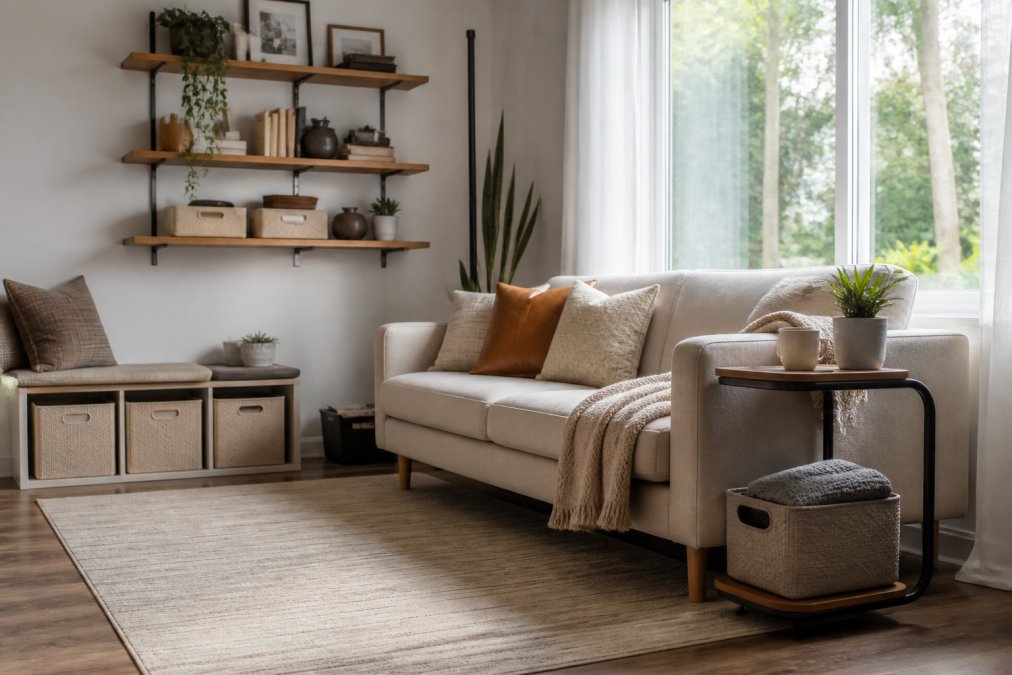
Coffee tables with shelves or drawers offer the same benefit. The C-Shaped Side Table with Faux Marble Top and Storage Shelf combines style with functionality. It slides under sofas, freeing floor space while providing two tiers of storage. The sturdy metal frame supports up to 66 pounds on the top shelf, making it reliable for everyday use.
Sleeper Sofas and Modular Seating
A sleeper sofa transforms your living room into a guest room without taking up extra square footage. Modern designs fold flat or pull out smoothly. Modular seating lets you reconfigure the layout as needs change. Start with a corner piece and add sections later if your space allows.
Look for modular furniture with built-in storage underneath. Some designs feature drawers or compartments that hold extra bedding, pillows, or seasonal items. This hidden storage keeps your living room looking clean while maximizing capacity.
Vertical Storage Solutions for Small Living Rooms
Vertical space is your best friend in a compact room. Most people focus on floor space and ignore the walls. Walls go all the way to the ceiling, use them.
Wall-Mounted Shelving and Open Storage
Wall-mounted shelves pull storage off the floor and make rooms feel larger. Install shelves above your sofa, next to windows, or along any empty wall. Floating shelves create visual lightness compared to heavy bookcases.
Open shelving works well for items you use regularly or want to display. Keep it organized with matching bins or baskets to maintain a clean look. Avoid cluttering shelves with too many small items, negative space matters as much as the items themselves.
Corner Shelves and Built-In Storage
Corners are often wasted space. Corner shelves fit snugly into these awkward areas and provide surprising storage capacity. Install them at eye level for display or higher up for items you access less often.
Built-in storage, if your living situation allows it, maximizes every inch. Wall-mounted cabinets with glass doors, like the Brown Wood Buffet with Glass Sliding Door, combine open and hidden storage. The tempered glass lets you display items while keeping dust out. At 42 inches wide, it fits along most walls without overwhelming the room.

Small Apartment Storage Ideas That Work
Storage bins and collapsible containers are the backbone of small-space organization. They keep items grouped, make things easy to find, and reduce visual clutter.
Storage Bins and Collapsible Containers
Fabric storage bins work better than plastic boxes in living rooms. They blend with decor and don't look institutional. The HOdo Home 3-Piece Fabric Storage Bins measure 15 by 11 by 9.5 inches each. Three bins fit neatly on a shelf or under a table. When empty, they collapse flat for easy storage.

Label each bin clearly. Use bins for throws, pillows, remotes, board games, or seasonal decor. This system makes items easy to locate and keeps everything contained. Matching colors or materials create visual harmony in a small space.
C-Shaped Side Table with Faux Marble →
Under-Seat and Under-Furniture Storage
The space under your sofa, chairs, and tables is prime real estate. Use low-profile storage boxes or rolling drawers to access this area. Under-seat storage works well for items you need occasionally but don't want on display.
Measure the clearance before buying storage solutions. Most sofas sit 6 to 12 inches off the ground. Flat containers fit better than tall boxes in these tight spaces. Rolling drawers make retrieval easier than reaching under fixed furniture.
Decluttering and Assessment Steps
Before organizing, you need to declutter. A small space can't hide excess items, everything shows. But decluttering in a confined living room isn't just about removing things; it's about managing the psychological weight that clutter creates in a space where you can't escape it.
Understanding the Mental Load of Small-Space Clutter
Research on environmental psychology shows that visible clutter in confined spaces increases cognitive load and reduces the sense of control. In a small living room, clutter doesn't just take up physical space, it occupies your mental space too. You see the same items repeatedly, which creates decision fatigue and stress. This is why small-space dwellers often report feeling more anxious in their homes than people in larger spaces with equivalent clutter levels.
Recognize this before you start. You're not just organizing; you're reclaiming mental clarity. This mindset shift makes decluttering feel purposeful rather than punitive.
The Four-Box Decluttering Method for Small Spaces
Sort items into four categories: keep, donate, sell, and discard. This is more precise than the traditional three-box method because it acknowledges that some items have resale value, which can motivate you to let them go.
Keep: Items you use regularly (at least monthly), items that serve a clear function, and items that genuinely bring you joy or have sentimental value you actively engage with.
Donate: Items in good condition you no longer use. Donating creates a sense of purpose, your items help others rather than sitting unused.
Sell: Furniture, electronics, or decor in good condition with resale value.
Decision Frameworks to Prevent Paralysis
The Replacement Test: If you were to replace this item today, would you buy it again? If the answer is no, it's taking up space for something you don't actually value.
Building a Sustainable Decluttering Rhythm
Decluttering isn't a one-time event in a small space, it's a maintenance habit. Apply the one-in-one-out rule going forward: when you bring something new into your living room, remove something of similar size. This prevents clutter from creeping back.
Optimize Your Layout for Better Flow
Furniture placement determines how a small room feels. Poor placement makes spaces feel cramped. Smart placement opens them up.
Furniture Placement and Visual Weight
Arrange furniture to create clear pathways. Avoid blocking natural light from windows, it makes rooms feel smaller and darker. Position your sofa to face the main focal point, like a TV or window, not a wall.
Cable Management and Tech Organization
Modern living rooms have cables everywhere: TV cords, charging cables, router wires. Visible cables make spaces look messy and chaotic. Manage them aggressively.
Build Habits for Long-Term Organization
Organization systems fail without habits. The best system in the world collapses if you don't maintain it. Start small and build consistency.
Frequently Asked Questions
What is the best way to organize a small living room with a lot of stuff?
Start by decluttering ruthlessly, keep only items you use regularly or genuinely love. Use vertical storage to maximize wall space with shelves and wall-mounted units. Invest in multi-functional furniture like ottomans with hidden storage and side tables with shelves. Use storage bins to contain smaller items and keep them labeled. The goal is reducing your furniture footprint while increasing storage capacity, which makes even crowded small living rooms feel more organized.
What are the best vertical storage solutions for small living rooms?
Wall-mounted shelving is the most effective option because it frees up floor space entirely. Install open shelving above sofas, beside windows, or in corners to display and store items without taking up square footage. Built-in storage and corner shelves maximize awkward spaces. For renters, leaning shelves or ladder-style organizers offer non-permanent alternatives. Vertical storage also creates visual interest and makes the room feel taller, which helps small spaces feel less cramped.
How can I organize my small apartment without buying lots of furniture?
Focus on small apartment storage ideas that work with what you have: use storage bins under existing furniture, add wall-mounted shelves above current pieces, and install hooks for hanging items. A C-shaped side table with storage shelf slides under your sofa and provides two tiers of space without taking additional floor area. Collapsible fabric storage bins (like the HOdo Home 3-pack at $12.35) stack neatly in closets or under tables. Prioritize hidden storage and vertical solutions over buying more furniture pieces.
Is there a rule for how much furniture should be in a small living room?
The 2/3 rule suggests keeping your furniture footprint to about two-thirds of your room to maintain clear walking paths and visual breathing room. In small spaces, this means choosing one or two substantial pieces (like a sofa) and filling the rest with compact, multi-functional items. Avoid filling every corner, empty floor space makes rooms feel larger. Measure your square footage first, then plan furniture placement so at least one-third of the room remains open for movement and visual flow.