

Where to Buy Sustainable Home Decor Online in 2026
Table of Contents
- Why Sustainable Home Decor Matters More Than Ever
- Quick Comparison: Top Eco-Friendly Home Decor Brands
- What to Look For When Buying Sustainable Home Decor
- How to Spot Greenwashing in Home Goods
- Non-Toxic Home Decor Picks for a Healthier Bedroom
- Sustainable Interior Design Tips for Every Room
- Common Mistakes to Avoid When Shopping for Sustainable Decor
- Conclusion: Build a Home That Reflects Your Values
- Frequently Asked Questions
Last Updated: September 6, 2026
Why Sustainable Home Decor Matters More Than Ever
The movement to buy sustainable home decor online has shifted from a niche preference to a mainstream priority. Sustainable home decor is defined by products made from renewable, recycled, or responsibly sourced materials that minimize environmental harm throughout their lifecycle.
The Environmental Protection Agency has long documented that textiles and home goods contribute significantly to landfill waste, making conscious choices about what we bring into our homes a genuine environmental lever EPA sustainable materials management resources. Beyond the environmental case, there's a personal one: many conventional furnishings are treated with chemical finishes that can affect indoor air quality, a concern that grows when you consider how much time we spend indoors.
Below, we'll show you how to evaluate materials, spot misleading marketing, and build a space that feels good and does good. But first, here's what most guides get wrong: they focus on aesthetics and price tags while ignoring the two questions that matter most, where a product came from and where it will go when you're done with it.
Quick Comparison: Top Eco-Friendly Home Decor Brands
| Brand | Starting Price | Key Materials | Standout Feature | Best For |
|---|---|---|---|---|
| PracticalHomeEssentials.com | $49.99 | GOTS organic cotton, reclaimed wood, alpaca | Curated, certified non-toxic bedding | Conscious shoppers wanting verified quality |
| Whisper Organics (via PHE) | $65.99 | GOTS & Fairtrade cotton | 500 TC sateen, ethically made in India | Luxury bedding without chemical finishes |
| Purple Nest Design (via PHE) | $315.00 | Alpaca, recycled polyamide | Handloomed by Peruvian artisans | Statement pieces with artisan heritage |
| Dennehey Design Co. (via PHE) | $130.00 | Reclaimed pallet wood | Handmade in Texas, citrus oil finish | Rustic, upcycled wall accents |
What makes a brand genuinely eco-friendly comes down to verifiable practices, not marketing language. A brand that uses recycled packaging but sources conventional cotton isn't necessarily better than one that skips fancy packaging but holds GOTS certification on every fiber.

What to Look For When Buying Sustainable Home Decor
Shopping for sustainable home decor online requires a different mindset than browsing a conventional catalog. You're not just comparing colors and dimensions; you're evaluating supply chains, material origins, and manufacturing processes from a product page.
Materials That Make the Cut
Start with the raw materials. Organic cotton, bamboo, reclaimed wood, recycled glass, and natural fibers like alpaca or hemp all score well on sustainability because they either regenerate quickly or give waste a second life. Look for specific material claims rather than vague terms like "natural" or "green."
Certifications You Can Trust
Certifications are your shortcut to trust. The Global Organic Textile Standard (GOTS) remains the gold standard for textiles, verifying both organic farming and ethical manufacturing. Fairtrade certification ensures artisans and workers receive fair compensation for their labor. When you see these logos, you know an independent auditor has verified the claims, not just the brand's marketing team.
How to Spot Greenwashing in Home Goods
Greenwashing is the practice of making misleading or unsubstantiated claims about a product's environmental benefits. It's rampant in home decor, where terms like "eco-friendly" and "sustainable" appear on everything from plastic storage bins to chemically treated furniture. The Federal Trade Commission's Green Guides offer clear guidance on what constitutes deceptive environmental marketing, and they're worth knowing before you shop FTC Green Guides on environmental marketing claims.
But knowing the definition isn't enough. The real skill is in verifying claims on a product page in under five minutes.
The 5-Minute Verification Workflow
Step 1: Find the Certification Number. A legitimate GOTS, Fairtrade, or FSC certificate always has a unique license or certificate number. Look in the description, the images, or the brand's sustainability page. If the number isn't visible, that's your first red flag.
Step 2: Search the Certifying Body's Database. Each major certifier maintains a public registry. For textiles, search the GOTS public database at global-standard.org. For wood products, use the FSC certificate database at info.fsc.org. For Fairtrade, check the Fairtrade International producer database. If the product or facility doesn't appear, the claim is unverified.
Step 3: Check the Scope of the Certificate. A brand might hold a GOTS certificate for one factory but sell products from another uncertified facility. The certificate should list the specific facility, product category, and scope. If the product you're buying isn't covered, the label is misleading.
Step 4: Look for the "Single-Attribute" Trap. A brand may tout its recycled packaging while its actual products are made from virgin, chemically treated materials. Ask: Does the claim apply to the product itself or just its packaging? A product described as "made with natural materials" might contain 5% bamboo and 95% conventional plastic.
The Three Questions That Expose Greenwashing
- Is the specific material named and quantified? "Organic cotton" is better than "natural fibers." "100% GOTS-certified organic cotton" is better still.
- Does a third-party certification back the claim? A brand's own "sustainability promise" is marketing, not verification.
- Does the brand discuss the product's full lifecycle, including disposal? If a product page can't answer these questions, treat its claims with skepticism.
The Hidden Greenwashing Signal: Vague Imagery
A product photographed in a field of wildflowers or styled with rustic wood and linen is not inherently sustainable. Visual aesthetics are a marketing tool, not an environmental indicator. Some of the most heavily greenwashed products use "nature-inspired" packaging to distract from conventional, chemically treated contents.
What Genuine Transparency Looks Like
A truly committed brand will typically provide: specific material percentages, country of origin, the certifying body, the certificate number, and a clear statement about end-of-life options. When you see this level of detail, you can trust the claims have been vetted.
Non-Toxic Home Decor Picks for a Healthier Bedroom
Your bedroom is where you spend a third of your life, making it the most important room to furnish with non-toxic home decor. Conventional bedding is often treated with formaldehyde resins, optical brighteners, and synthetic dyes that can off-gas into your breathing air. Certified organic alternatives eliminate these concerns.
For a healthier bedroom, consider the 500 TC Sateen Bed Sheets at $149.99. These sheets are 100% GOTS-certified and Fairtrade-certified organic cotton, ethically made in India with a luxurious 500 thread count sateen weave. They're hypoallergenic and naturally breathable. For a complete set at a lower price point, the Organic Sateen Bed Sheets Set at $49.99 offers GOTS-certified organic cotton with a soft sateen weave.

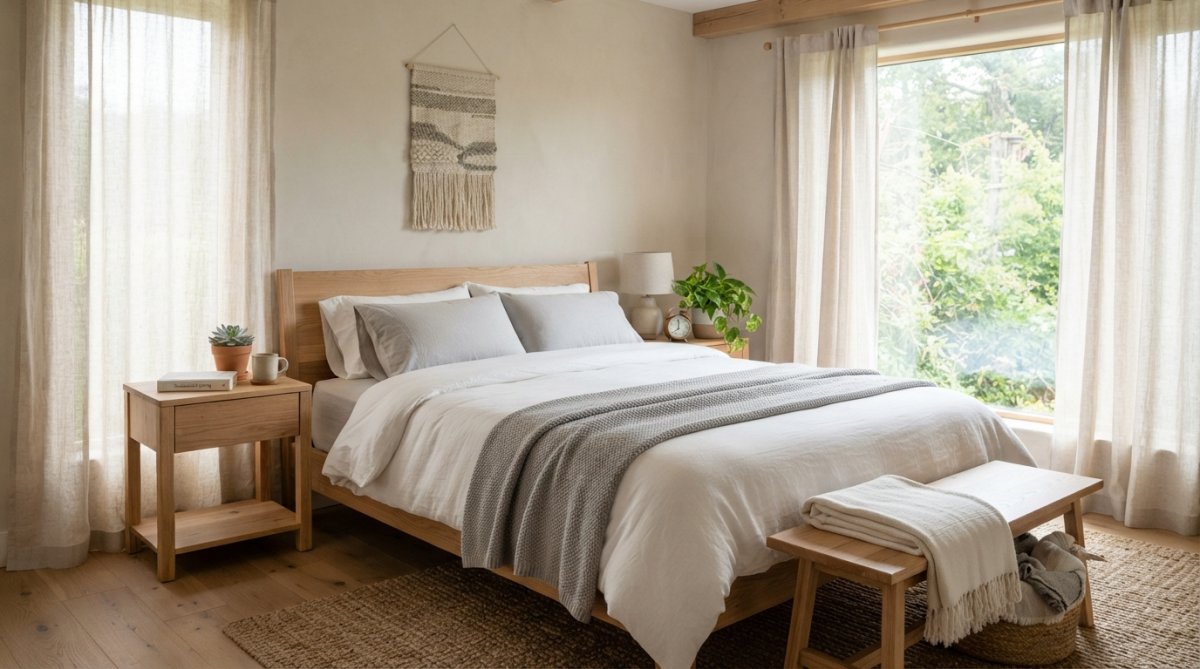
For mattress protection, the Organic Waterproof Pique Knit Mattress Cover at $76.99 combines 100% GOTS-certified cotton with a quiet, breathable pique knit top layer that's fully waterproof and dust mite resistant.

Sustainable Interior Design Tips for Every Room
Sustainable interior design tips extend far beyond bedding. The principles apply to every surface, from the throw blanket on your sofa to the wall art in your entryway. The core philosophy is simple: choose fewer, better things that will last, and favor natural, renewable materials over synthetic alternatives.
Living rooms benefit from natural fiber textiles. The Neutral Floral Woven Throw Blanket at $148.00 is made from soft cotton, proudly woven in the USA, and features a reversible design that gives you two looks in one. For a touch of artisanal luxury, the Handloomed Alpaca Bouclé Ivory Throw Blanket From Peru at $315.00 is handwoven on traditional wooden looms from a blend of 89% pure alpaca and 11% recycled polyamide, supporting master weavers whose skills span generations.
Wall decor offers another opportunity for sustainable choices. The Reclaimed Pallet Wood Hearts at $130.00 are handmade in Texas from reclaimed pallet wood with a natural citrus oil finish. Each piece carries the warmth and character of wood that would otherwise end up in a landfill.
Common Mistakes to Avoid When Shopping for Sustainable Decor
The biggest mistake shoppers make is confusing aesthetics with ethics. A product that looks rustic or "natural" in photos may be mass-produced from conventional materials with chemical finishes. Visual style is not a sustainability indicator.
Two other mistakes are even more costly to the planet: the carbon footprint of shipping and the product's end-of-life fate.
Mistake 1: Ignoring the Carbon Cost of Shipping
The environmental impact of your purchase isn't just the product itself; it's also how it gets to you. The U.S. Environmental Protection Agency's transportation data consistently shows that freight movement is a major contributor to greenhouse gas emissions EPA on transportation and climate change.
The fix: Before you click "buy," check the shipping method. Choose standard ground shipping over expedited air freight whenever possible. Consolidate multiple items into a single order. Consider whether a local artisan or U.S.-based maker might offer a comparable product without the transoceanic journey.
Mistake 2: Overlooking End-of-Life Disposal
A truly sustainable product is one that can be composted, recycled, or responsibly disposed of when its useful life ends. Most buying guides stop at the point of purchase. But where will that product go in five or ten years?
The end-of-life breakdown for common decor materials:
- 100% organic cotton, linen, hemp, or wool: Fully compostable. Cut into pieces and add to a backyard compost bin, or check if your municipality offers textile recycling. These fibers break down naturally within months.
- Reclaimed solid wood with natural oil finishes: Can be repurposed, donated, or, if truly at end of life, chipped for mulch or composted. Avoid sending it to a landfill where it will slowly release methane.
- Recycled glass: Infinitely recyclable. Check your local curbside program or drop-off center.
- Blends like the alpaca throw's 89% alpaca / 11% recycled polyamide: These require more thought. The synthetic content prevents full composting. Check if the brand offers a take-back program, or look for a specialized textile recycler that can separate the fibers.
- Products with synthetic foams, glues, or chemical finishes: These are the hardest to dispose of responsibly. They often end up in landfills. This is why choosing natural, single-material products from the start is the most sustainable decision you can make.
Mistake 3: Buying Trendy Pieces Over Timeless Ones
Social media feeds are full of "must-have" decor that looks dated within a season. Trend-driven purchases are inherently unsustainable because they lead to rapid replacement. Invest in timeless, durable goods that will still look good in a decade.
| Mistake | Why It Happens | Better Approach |
|---|---|---|
| Trusting visual aesthetics | Rustic styling implies sustainability | Verify materials and certifications |
| Ignoring shipping footprint | Focus only on product attributes | Choose standard ground shipping, consolidate orders, buy local when possible |
| Overlooking disposal | No thought to product lifecycle | Choose biodegradable or recyclable materials; ask the brand about take-back programs |
| Buying trendy pieces | Social media influence | Invest in timeless, durable goods |
Conclusion: Build a Home That Reflects Your Values
Creating a sustainable home isn't about achieving perfection overnight. It's about making incremental choices that align your living space with your values, one product at a time. Start with the room where you spend the most time, verify certifications, and favor quality over quantity.
At PracticalHomeEssentials.com, we offer a curated selection of quality goods. From GOTS-certified organic bedding starting at $49.99 to handcrafted reclaimed wood decor and artisan-made alpaca throws, we provide options for your home. Enjoy the convenience of shopping for premium home essentials delivered directly to your door with the added benefit of free shipping.
Get started with PracticalHomeEssentials.com and build a space that's comfortable, beautiful, and genuinely sustainable.
Frequently Asked Questions
What should I look for when buying sustainable home decor?
Start by checking the materials. Look for renewable resources like bamboo, organic cotton, recycled glass, and reclaimed wood. Then verify certifications such as GOTS for textiles, Fair Trade for ethical sourcing, and FSC for wood products. Avoid vague claims like 'eco-friendly' without proof, and check if the brand discloses its supply chain. Durable goods that last years are inherently more sustainable than cheaper items you will replace quickly.
How can I tell if a home decor brand is truly sustainable?
Look for transparency. A genuinely eco-friendly home decor brand will name its certifications, factories, and material sources. Watch for greenwashing: terms like 'all-natural' or 'green' without third-party verification. Check if the brand uses recycled materials, supports fair trade, and minimizes packaging. GOTS, Fairtrade, and FSC certifications are reliable signals. Brands that discuss their carbon footprint and end-of-life disposal for products are usually more committed than those making generic claims.
Is it more expensive to buy sustainable home decor?
Sustainable home decor often costs more upfront. For example, an organic cotton sheet set costs about $50, while a GOTS-certified 500 thread count set runs $150.
What certifications should I look for in sustainable home goods?
GOTS (Global Organic Textile Standard) is the gold standard for organic textiles like bedding and throws. Fairtrade certification ensures artisans and farmers receive fair wages. FSC (Forest Stewardship Council) verifies wood products come from responsibly managed forests. For upcycled items, look for brands that clearly describe their reclaimed sources. These certifications provide verifiable proof rather than relying on marketing language.