

Best Quality Bedding for Pet Owners: 2026 Guide
Table of Contents
- What Makes Bedding Pet-Friendly: Key Fabric Features
- Performance Fabrics vs. Natural Fibers for Pet Homes
- Pet Hair Resistant Comforter Materials and Construction
- How to Remove Pet Hair from Bedding: Washing and Care
- Best Fabric for Pet-Friendly Home Decor and Bedding Selection
- Managing Pet Dander and Allergens in Bedding
- Top Bedding Recommendations for Pet Owners
- Conclusion
Last Updated: August 28, 2026
What Makes Bedding Pet-Friendly: Key Fabric Features
Pet-resistant bedding comes down to thread count, weave density, and fiber composition. The best quality combines durability with breathability. For pet homes, the sweet spot is 300-500 thread count in long-staple cotton or a performance blend. Long-staple cotton fibers are longer and stronger than standard cotton, holding together better under stress. Weave density, how tightly threads interlace, creates the physical barrier that prevents pet hair penetration. Percale weaves are naturally tight and durable. Sateen weaves offer softness while maintaining decent density. Both outperform loose jersey knits, which pet claws shred easily.
Thread Count and Weave Density
For pet-friendly bedding, aim for 300-500 threads per inch rather than the 1000+ counts marketed for luxury bedding (peer-reviewed research). High thread counts trap heat, which pets actively avoid. A 400-thread-count long-staple cotton offers the best compromise: tight enough to repel hair, breathable enough for comfort.
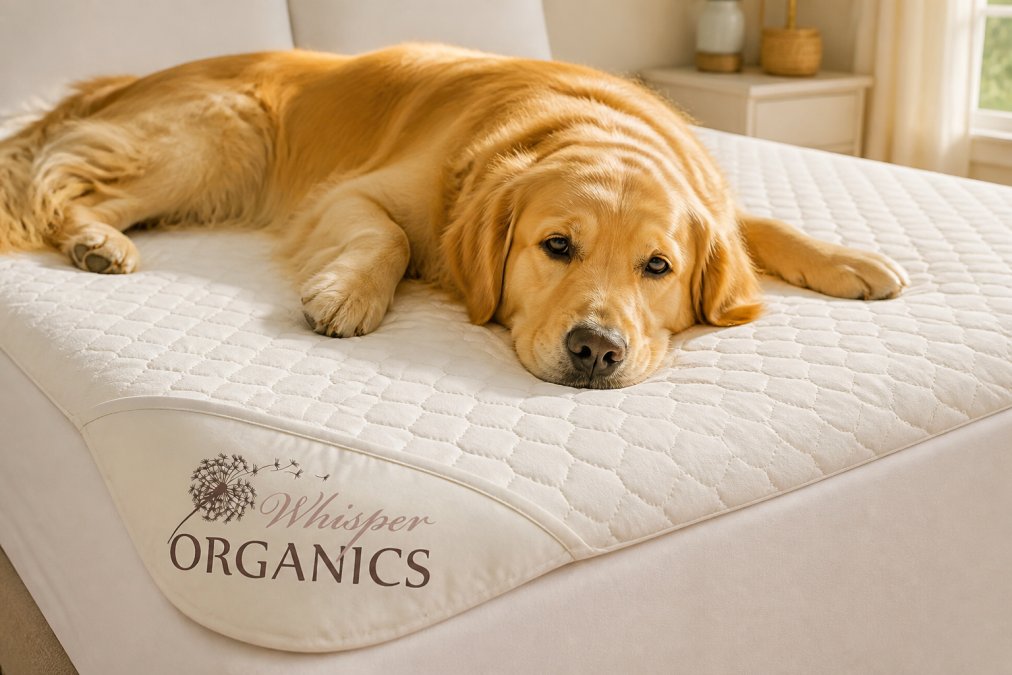
Weave density works independently of thread count. Percale weaves use a one-over-one-under pattern, creating a crisp, tight surface that resists both pet hair and staining. Sateen weaves use a four-over-one-under pattern, creating a dense, lustrous surface when made with quality fibers. The Luxury Organic Cotton Quilted Mattress Pad Protector uses 500-thread-count long-staple cotton with quilted construction that adds durability, handling repeated washing and pet contact without degrading.

Durability Against Claws and Shedding
Pet claws puncture fabric directly, while shedding creates a grinding action that pills and frays surface fibers. Fiber length determines claw resistance, short fibers break easily under pressure, while long-staple cotton fibers bend and flex without snapping. A blend of 60% long-staple cotton and 40% polyester can offer enhanced claw resistance while maintaining breathability.
Shedding resistance depends on yarn twist and finish. Tightly twisted yarns hold together better when surface fibers rub. An anti-pilling finish prevents loose fibers from forming pills, though this degrades after 30-40 washes (peer-reviewed research). The Organic Waterproof Pique Knit Mattress Cover uses a pique knit construction with reinforced top layer designed to withstand pet accidents and repeated cleaning.
Performance Fabrics vs. Natural Fibers for Pet Homes
Natural fibers like cotton and linen are breathable and temperature-regulating, but pure cotton pills easily under friction and weakens when wet. Performance fabrics like polyester and nylon are engineered for durability and resist staining, but they trap heat. The best bedding for pet owners blends both: a 60-40 or 70-30 cotton-polyester blend breathes reasonably, resists staining, and survives repeated washing without degrading.
Synthetic blends also enable special finishes that pure cotton can't support. Waterproof coatings bond better to polyester, and stain-resistant finishes adhere more reliably to synthetics. The trade-off is heat retention, pure cotton breathes better than a polyester blend, but for most households, durability gains outweigh the minor heat difference.
Synthetic Blends and Their Advantages
A 60-40 or 70-30 cotton-polyester blend is a practical choice for pet homes. Polyester adds durability without eliminating breathability entirely. The blend resists staining better than pure cotton, dries faster after accidents, and survives repeated washing without degrading.
Long-Staple Cotton and Organic Options
If you prioritize natural fibers, long-staple cotton (like Pima or Egyptian varieties) is worth the premium. Long fibers are stronger, pill less, and soften with washing rather than degrading. Organic certification (GOTS, Global Organic Textile Standard) ensures the cotton was grown without synthetic pesticides and processed without harsh chemicals, which matters for pets with sensitive skin or allergies.
The Luxury Organic Cotton Quilted Mattress Pad Protector combines 100% GOTS-certified organic cotton with 500-thread-count long-staple fibers, prioritizing natural breathability and hypoallergenic properties while the high thread count and quilted construction provide durability. Organic cotton costs more upfront but justifies the expense for pets with allergies or those seeking non-toxic bedding.

Pet Hair Resistant Comforter Materials and Construction
A pet hair resistant comforter needs a surface texture that repels hair and construction that prevents hair from migrating through layers. Smooth, tightly woven surfaces shed pet hair more easily than fuzzy or loose weaves. Sateen finishes are slippery and shed hair well. Percale weaves are crisp and hair-resistant. Microfiber attracts hair through static, avoid it for pet homes.
Quilted comforters have stitched channels that lock filling in place and create barriers to hair movement. Box-stitched comforters allow more hair migration than channel-stitched designs. Comforters with stitching every 4-6 inches can create small compartments that help contain filling.
Tight Weaves That Repel Hair
Percale weave is a strong option for hair repellency. The one-over-one-under pattern creates a smooth, crisp surface where pet hair doesn't catch and dries quickly. Sateen weave offers similar hair-repellent properties with a softer feel. Avoid loose jersey knits, flannel, and brushed cotton, these can deteriorate rapidly under pet use.
Anti-Static Technology and Fabric Finishes
Static electricity attracts pet hair like a magnet. Anti-static finishes can reduce this attraction, making hair easier to remove during washing. Performance fabrics may accept anti-static treatments better than natural fibers, potentially maintaining properties for more washes.
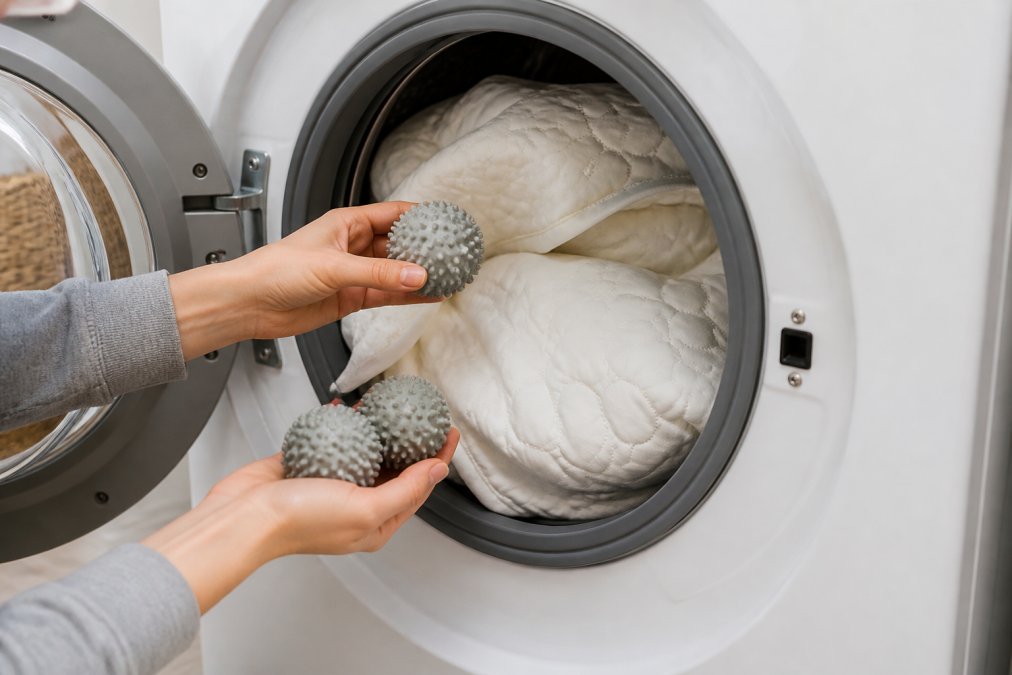
Skip fabric softener on pet bedding, it coats fibers with waxy residue that attracts pet hair. Instead, use wool dryer balls or reusable lint remover balls to reduce static and pet hair clinging during drying.
How to Remove Pet Hair from Bedding: Washing and Care
Pet hair removal starts before the wash cycle. Lint rollers and sticky tape remove surface hair quickly, eliminating a significant portion of visible hair before washing. Lint remover balls work during the wash cycle itself, agitating bedding and trapping loose fibers. The 4-Pack Reusable Laundry Lint Remover Balls ($10.00) are designed specifically for this purpose.
Pre-Wash Preparation and Lint Removal
Remove loose hair outside or over a trash bin using a lint roller or sticky tape. Shake bedding vigorously outdoors, pet hair loosens with movement. Check pockets, seams, and quilted channels for embedded hair using a pet hair removal brush or old toothbrush. Turn comforters inside out before washing to expose the back side where hair often clings.
Machine Washing and Drying Best Practices
Use cold or warm water, never hot. Wash pet bedding separately from other laundry to prevent cross-contamination. Use the delicate or gentle cycle for quilted or organic cotton bedding; standard cycles work fine for performance blends.
Add lint remover balls to the wash cycle. Dry on low heat to preserve fabric longevity. Remove bedding while slightly damp and air-dry to completion. Skip fabric softener entirely, use vinegar (1/2 cup in the rinse cycle) to soften fabric naturally without buildup.
Best Fabric for Pet-Friendly Home Decor and Bedding Selection
Choosing the right fabric requires matching performance characteristics to your specific pet situation. Pet size and breed affect fabric choice, small pets with light claws may need less tear-resistant fabric than large dogs. Heavy shedders benefit from tightly woven, hair-repellent surfaces. Pets with anxiety issues that lead to accidents need waterproof or water-resistant layers.
Percale and Sateen Weaves
Percale is a practical choice for most pet homes. It's crisp, durable, hair-repellent, and affordable. Percale dries quickly and resists pilling. Sateen offers a good balance of comfort and durability, it's softer than percale, feels luxurious, and still resists pet hair effectively. For pet owners: pick percale if durability and quick-drying matter most; pick sateen if comfort is a priority.
Bamboo and Tencel for Breathability
Bamboo-derived fabrics (Tencel and viscose) offer a middle ground between cotton and synthetics. They're softer than cotton, more breathable than polyester, and can be more durable than pure cotton. Tencel is made from sustainably harvested bamboo using closed-loop manufacturing. It breathes exceptionally well and doesn't trap heat like synthetics. The downside: Tencel can be more expensive and less durable than high-quality performance fabrics.
Managing Pet Dander and Allergens in Bedding
Pet dander accumulates in bedding and triggers allergies in both pets and humans. Tightly woven fabrics trap dander less effectively than loose weaves. Organic fabrics without chemical finishes can reduce irritation for sensitive animals. Weekly washing removes accumulated dander more effectively than monthly washing.
Mattress protectors create a barrier between the mattress and pet contact, preventing dander, urine, and other fluids from soaking into the mattress and extending mattress life.
Hypoallergenic Materials and Barrier Protection
GOTS-certified organic cotton is genuinely hypoallergenic because it's grown without synthetic pesticides and processed without harsh chemicals (textileexchange.org). Bamboo-derived fabrics are naturally hypoallergenic with antimicrobial properties that can reduce dust mite populations in bedding.
Protecting Your Mattress with Quality Covers
A quality mattress protector is non-negotiable in pet homes. Waterproof protectors create a complete barrier preventing liquids from reaching the mattress. The Organic Waterproof Pique Knit Mattress Cover ($76.99) uses a waterproof layer while maintaining breathability through its pique knit top.

Quilted protectors (like the Organic Cotton Quilted Mattress Pad Protector at $141.99) absorb liquids without waterproofing, working well for light accidents and regular shedding. Choose quilted if you want maximum breathability and comfort; choose waterproof if accident prevention is the priority. Deep pockets should fit mattresses up to 17 inches deep.
Top Bedding Recommendations for Pet Owners
Organic Cotton Options with Superior Protection
The Luxury Organic Cotton Quilted Mattress Pad Protector ($149.49) is a top choice for pet owners prioritizing natural materials and comfort. It uses 500-thread-count long-staple GOTS-certified organic cotton with quilted construction providing durability without waterproofing. The 1/3-inch thick padding absorbs regular shedding and light accidents while maintaining exceptional breathability.
The Organic Cotton Quilted Mattress Pad Protector ($141.99) offers similar benefits at a lower price point with 300-thread-count long-staple cotton and 1/4-inch padding. Both use GOTS and Fairtrade certification, ensuring ethical production and non-toxic materials.
| Protector | Price | Thread Count | Padding | Best For | Waterproof |
|---|---|---|---|---|---|
| Luxury Organic Cotton Quilted | $149.49 | 500TC | 1/3" | Maximum comfort & durability | No |
| Organic Cotton Quilted | $141.99 | 300TC | 1/4" | Budget-conscious pet owners | No |
| Organic Waterproof Pique Knit | $76.99 | Not specified | None | Accident prevention | Yes |
Waterproof Covers for Accident Prevention
The Organic Waterproof Pique Knit Mattress Cover ($76.99) is a practical choice for households expecting accidents. The waterproof layer prevents any liquid from reaching your mattress, while the pique knit top layer maintains breathability and comfort. GOTS-certified organic cotton ensures you're not sacrificing material quality for accident protection. Machine washable and tumble dry-safe, it handles repeated washing without degrading.
Choose this if you have pets prone to accidents, young animals in training, or senior pets with incontinence. For maximum protection, layer both: use the waterproof cover as your first line of defense, then add a quilted protector on top for comfort and additional durability.
Choosing the best quality bedding for pet owners requires balancing durability, breathability, and your specific pet situation. Tightly woven fabrics with 300-500 thread count in long-staple cotton or performance blends outperform standard bedding in pet homes. Organic options work best for allergic pets, while waterproof protectors prevent mattress damage from accidents.
At PracticalHomeEssentials.com, we offer a curated selection of bedding that can be suitable for pet households. The Luxury Organic Cotton Quilted Mattress Pad Protector combines natural breathability with durability, it's a strong choice for pet owners who want comfort without compromising on protection. For households dealing with accidents or heavy shedding, the Organic Waterproof Pique Knit Mattress Cover provides peace of mind at a practical price point. Both options are available with free shipping, making quality pet-friendly bedding accessible. Choose options that match your household's needs and start protecting your mattress investment today.
Frequently Asked Questions
Q: What is the best bedding for pet owners?
A: The best bedding for pet owners combines tightly woven, high-quality fabrics with stain and odor resistance. Long-staple cotton with high thread count (300-500 TC), percale weaves, and performance fabrics with anti-static finishes perform well. Look for hypoallergenic, machine-washable materials that resist pilling and tearing. Organic cotton options like our Luxury Organic Cotton Quilted Mattress Pad Protector ($149.49) offer durability and non-toxic construction, while waterproof covers provide essential protection against accidents.
Q: How do I keep pet hair from sticking to my pet hair resistant comforter?
A: Pet hair resistant comforters use tight weaves and anti-static technology to repel rather than attract fur. Choose fabrics with sateen or percale finishes that create smooth surfaces hair slides off easily. Before washing, use lint remover balls or a handheld vacuum to capture loose hair. Our 4-Pack Reusable Laundry Lint Remover Balls ($10.00) trap pet hair during the wash cycle. Wash in cold water with an extra rinse cycle, and dry on low heat to minimize static buildup that attracts hair.
Q: What fabric is most pet-friendly for bedding?
A: The best fabric for pet-friendly home decor bedding balances durability, breathability, and washability. Long-staple cotton, bamboo, and tencel offer moisture-wicking and softness while resisting pilling. Percale weaves are crisp and durable; sateen weaves are silky and tear-resistant. Organic, GOTS-certified cotton eliminates harmful chemicals pets might contact. Our Organic Waterproof Pique Knit Mattress Cover ($76.99) combines GOTS-certified cotton with waterproof protection, making it ideal for pet households. Avoid delicate fabrics prone to snagging from claws.
Q: How often should I wash bedding if my pets sleep in the bed?
A: Wash pet bedding every 7-10 days if pets regularly sleep in the bed, or every 2 weeks for occasional contact. If your pet has accidents, wash immediately. Pre-treat stains with enzyme-based cleaners before washing. Use cold or warm water for washing and add an extra rinse cycle to remove dander and odors. Machine-washable covers like our mattress protectors can extend the life of your mattress by being washed separately. For optimal freshness and allergen control, weekly washing is often recommended for pet-sharing bedrooms.
Q: What features should I look for in pet-friendly duvet covers?
A: Seek duvet covers with secure closures (zippers or ties) to prevent pets from burrowing inside. Choose high thread count (300+), tightly woven fabrics that resist snags and tears. Look for hypoallergenic, machine-washable materials with stain resistance and odor-control finishes. Deep pockets can ensure a secure fit even with active pets. Waterproof or moisture-wicking layers protect against accidents. Avoid delicate fabrics; percale and sateen weaves offer durability. Consider covers with non-slip backing to prevent bunching. Our Organic Cotton Quilted Mattress Pad Protector ($141.99) provides a protective barrier that's easy to remove and wash.
This article was written using GrandRanker